Important Notice for Patients with Blue Cross Blue Shield of Florida

July 1, 2025 by Emily Grant

Please be advised that while our surgery center is committed to providing high-quality care, some services you receive during your procedure may be provided by independent practitioners (such as anesthesia, pathology or radiology providers) who may not participate in the Blue Cross Blue Shield of Florida network. As a result, you may receive a separate bill from an out-of-network provider.

Our center and AMSURG comply with the No Surprises Act. For Anesthesia Services performed by an out-of-network provider at an in-network facility, your plan should provide in-network coverage. You are only responsible for paying your share of the cost (including co-payment, deductible and co-insurance which would be required if the provider was in-network).

We encourage you to contact your insurance plan directly to understand your out-of-network benefits and potential financial responsibility. If you have questions about which providers may be involved in your care, please speak with our staff.

Thank you for choosing our center for your care.

Filed Under: News Tagged With: 2024, 2033, 2129, 2135, 2152, 2187, 2226, 2227, 5152

You’re Not Too Young: Why Colon Cancer Screening Matters

June 30, 2025 by Emily Grant

Colorectal cancer is rising in adults under 50, making it a growing concern among younger populations. This trend highlights the urgent need for timely screenings. Ongoing research is helping doctors learn more about the causes and improve early detection to save lives.

New Research Studies CRC Development

Researchers recently made an important discovery that could help us better understand how colorectal cancer (CRC) develops. In a study published in Nature Communications, scientists used mouse models to explore how certain proteins affect tumor growth.

The Spanish National Cancer Research Center team focused on a well-known protein called p53 and another protein called URI. P53 helps prevent tumors. Studies link URI to several types of cancer.

Researchers found that “if URI was eliminated or p53 levels were increased in polyps, the polyps did not develop into tumors.” They also learned that under the same conditions, “the mice with colorectal cancer lived longer.”

Now, the team’s ongoing work is focusing on the development of URI inhibitors.

“These inhibitors may have an impact on the treatment of colorectal cancer and other URI-related cancers, offering an innovative therapeutic approach to slow down tumor progression and improve patient care,” said Nabil Djouder in Medical XPress. Djouder is the head of the Growth Factors, Nutrients and Cancer Group.

Trending: Early-Onset Colorectal Cancer

As research on colorectal cancer continues, learn about your risk factors, symptoms and screening guidelines to protect your health.

Most colorectal cancers start as small growths, called polyps, on the lining of the colon (large intestine). These polyps can slowly turn into cancer over time.

Experts refer to CRC in younger people as early-onset colorectal cancer. Reports indicate CRC incidence is rising in people ages 20 to 45.

Doctors are not sure why more young people are developing CRC. It may be because of a mix of genetic and environmental factors. You may be at high risk if you have any of the following:

  • Inflammatory bowel disease (IBD), such as Crohn’s disease or ulcerative colitis
  • A family history of colorectal cancer or colon polyps
  • A diet low in fruits and vegetables and high in processed foods
  • A history of smoking or heavy alcohol use
  • Diabetes or obesity

Many early-onset CRC cases are found late because symptoms are often missed or confused with other common health issues. Some warning signs to watch for include the following:

  • Changes in bowel habits
  • Blood in your stool
  • Unexplained weight loss or constant tiredness
  • Ongoing stomach discomfort or cramping

In many cases, CRC doesn’t cause any symptoms, which is why screening is important. If you’re experiencing symptoms, talk to your doctor about screening, regardless of your age.

Timely Screenings Save Lives. Don’t Wait for Symptoms.

Colorectal cancer is a leading cause of cancer death in the United States. For adults under 50, CRC is now the No. 1 cause of cancer death in men and the second leading cause in women.

More than any diet or exercise regimen, timely screening is the best way to protect yourself from colorectal cancer.

The U.S. Preventive Services Task Force recommends that adults at average risk for CRC start regular screenings at age 45. If you have one or more risk factors, you may need to screen sooner. Your doctor can help you choose the screening that’s right for you.

Colonoscopy is the only test that not only finds signs of cancer but also removes precancerous polyps during the procedure. This helps prevent cancer from developing.

The good news is most insurance plans cover a screening colonoscopy for adults 45 and older. Contact your insurance provider to confirm your coverage.

If you choose a different screening method and get an abnormal result, a follow-up colonoscopy will be needed to check for cancer or other health concerns.

Schedule Your Colonoscopy Today at Our ASC

CRC is both preventable and highly treatable when detected early. A colonoscopy is the most efficient way to catch problems early or prevent cancer altogether.

Our Ambulatory Surgery Center (ASC) makes it easy to get the care you need:

  • Timely, efficient outpatient care
  • Lower costs than hospital-based procedures
  • Shorter wait times and personalized attention
  • A safe, comfortable environment focused on your well-being

Early detection saves lives. If you’re due for a colonoscopy or need a follow-up, don’t wait. Protect your health and schedule your screening today.

Filed Under: News Tagged With: gi

Vision, Clarity and Care: An Ophthalmologist Focuses on Cataracts

June 26, 2025 by Emily Grant

If you’re having trouble seeing at night or if your vision has become cloudy or blurry, it may be time to talk with your eye doctor. June is Cataract Awareness Month, an opportunity to focus on protecting your vision.

The Centers for Disease Control and Prevention report that more than 20.5 million people in the U.S. aged 40 and older have cataracts. Early detection and treatment of cataracts can maintain and even improve your quality of life.

“Talk with your optometrist or ophthalmologist about seeing better!” said George Wandling, MD, a board-certified ophthalmologist. “Cataract surgery is an amazing procedure with millions of happy experiences every year.”

Having performed hundreds of cataract surgeries each year, Dr. Wandling shared his knowledge about cataracts, the importance of treatment and the benefits of choosing an ambulatory surgery center (ASC) for cataract procedures.

Q. What Are Cataracts, And Why Do They Happen?

A. Cataracts are a hardening, yellowing and opacification of your natural crystalline lens in your eye. They happen to everyone in time. Sometimes medications, trauma or medical conditions make cataracts happen earlier. Cataracts are live cells, meaning they continue to grow and divide. Eventually, they become too clouded or hardened over the course of our life. Nowadays, the average age for people needing cataract intervention is about 70, because the vision has been affected to such a level that the patient is bothered.

Q. What Are Some of the Most Common Signs or Symptoms of Cataracts?

A. Usually, the first thing people notice is nighttime driving symptoms, such as halos or glare around light, or the general diminishing of their vision at night.

It’s time to have surgery when we are no longer able to fix bothersome symptoms from cataracts by changing your glasses prescription. At that point, glasses can’t help any longer, and we have to take the cataract out and put in a new lens.

Q. How Do Cataracts Impact Daily Life if Left Untreated?

A. If untreated, cataracts can make us completely blind. They can wholly opacify and turn into a white cataract. Most people have seen a dog with a white cataract where you look at their eye and see that it’s completely white centrally. At that point, color and objects can’t be seen; nothing other than light can be seen. Usually, patients pursue treatment well before they get to that point.

Q. At What Point Should Someone Consider Seeing an Eye Doctor about Their Vision Changes?

A. If you feel like your vision is affecting your daily life, you should see an eye doctor, whether that be driving, seeing the crawl on the TV screen or seeing your grandkid’s baseball game.

Q. Is Cataract Surgery the Only Treatment Option, or Are There Alternatives?

A. Typically, our first step is to try the patient in glasses or contacts. If that is insufficient and we determine that cataracts are the source of vision changes and are worsening, then we need to perform cataract surgery. There are no eye drops, homeopathic remedies or exercises that can reduce cataracts.

Q. What Would You Say to Patients Who Are Hesitant or Anxious about Cataract Surgery?

A. Cataract surgery is as straightforward and non-invasive as surgeries come. We are confident that we can get anyone through cataract surgery. We have anesthesia in most cases to help the patient with any anxiety they may have. The success rate of cataract surgery is phenomenal, and the complication rate is very low.

Q. How Has Cataract Surgery Evolved in Recent Years, Especially with the Use of Laser-assisted Technology?

A. Cataract surgery in its current form started about 40 years ago. Laser-assisted technology started about 15 years ago. The laser has really helped us with precision and fixing astigmatism, which has held people back from obtaining their best possible vision. The laser has really helped us to get people out of glasses and made more complicated surgeries easier.

Further, over the past few years, the biggest evolution has been the variety of different lenses (trifocal, light adjustable lens, etc.). The depth of focus and the ability to be glasses-free after cataract surgery continues to evolve and is available for more and more patients with any eye health and with many different conditions.

Q. Can You Explain the Different Lenses and How the Right Lens Is Chosen for Each Patient?

A. There are many different types of lens implants. There are standard lens implants that serve patients very well; however, the patient may need to be in contacts or glasses after the procedure.

Within the last five or six years, the variety of different lenses has grown.

There are monofocal lenses that give a little more arm’s length vision, but you’re still expected to need readers for fine print.

Multifocal lenses or trifocal lenses give great distance, intermediate and up-close vision. Many patients who choose these lenses are able to get out of glasses entirely.

There’s something called a light adjustable lens (LAL) that gives you contiguous vision and a lot of depth of field, and often, those patients are able to be glasses free as well.

The correct choice is ultimately up to the patient and a discussion with the patient’s ophthalmologist as to which may be the best option. Sometimes different lens implants have costs associated, as often insurance doesn’t cover all lens options.

NOTE: Patients should consult with their healthcare provider about coverage.

Q. What Are the Benefits of Having Cataract Surgery at an Ambulatory Surgery Center (ASC) Rather Than a Hospital?

A. ASCs have shown to be better than hospitals when it comes to patient experience, and the overall time in the facility is less at an ASC. Additionally, patients have lower complication rates, the staff are specialized and are very familiar with cataract procedures and the recovery time is faster at ASCs.

Q. How Do ASCs Support a More Comfortable or Convenient Experience for Patients?

A. Because outpatient surgery is the sole purpose, it is easier for ASCs to make each patient feel valued. We are able to give the proper attention to the patient, and each staff member is empowered to help and well-versed with all of the procedures that come through our ASCs.

Q. What Does a Typical Cataract Procedure Look Like — from Arrival to Discharge?

A. The patient checks in at the front desk with a family member or friend and waits to be called back into the pre-operative area. Once they are called back to pre-op, the nursing team preps the patient for the procedure. The patient will get eye drops instilled and an IV so anesthesia can be delivered just before the procedure. When it’s time for the procedure, the patient is brought back to the operating room, where the patient receives anesthesia medications to keep them comfortable. The time in the OR is typically 15 to 30 minutes.

The patient is then taken to the post-operative area, where the patient is given a light snack and something to drink. Just before discharge, the nurse reviews the post-operative eye drops and discharge instructions with the patient before helping them out to their car to be driven home by a family member or friend. The patient should take it easy on the day of the procedure. The next day, they can typically resume most activities.

Q. How Quickly Can Most Patients Expect to Recover And See Improvement in Their Vision?

A. We tell patients to expect vision to be blurry for a week following the procedure but be happy when it’s less. Some patients do see great on day one, but it’s more common to be blurry for a few days after. Typically, there’s no pain, you don’t look any different, and no one can tell you’ve had cataract surgery.

Q. What Kind of Results Can Patients Realistically Expect after Cataract Surgery?

A. I would expect improvement of halos and glare, and improvement in overall vision. Every patient is going to be different in terms of how sharp their vision will be after cataract surgery based upon other conditions. The satisfaction rate of cataract surgery is very high.

Q. Who Is a Good Candidate for Cataract Surgery at an ASC?

A. The vast majority of people are great candidates for cataract surgery at an ASC. The exceptions are those who are very sick, those who have had recent heart procedures (including stents), those who are at risk for difficulty breathing or those who have a very high BMI. Overall, over 99 percent of patients are appropriate for cataract surgery at an ASC.

Q. What Do You Wish More People Knew about Cataracts And Cataract Surgery?

A. Your vision in the office may be 20/20, but that doesn’t tell the whole story because that is an idealized situation.

A common example I use for patients is my aunt. Her vision was 20/20 and she saw well with her contacts. She was 80 years old, so I knew she had cataracts, and she really didn’t have too many complaints about her vision except for night traveling. One night, driving behind an ambulance, she was panicked because she couldn’t see anything with the severe glare.

If you’re having difficulty with your vision, insurance always pays for cataract surgery if the ophthalmologist agrees that’s the reason your vision has declined. You can have 20/20 vision and still have the need for cataract surgery.

Schedule Your Cataract Surgery at Our ASC

During Cataract Awareness Month, take steps to preserve your vision. If you and your eye doctor determine you need cataract surgery, our ASC is convenient, efficient and focused on patient comfort and personalized care.

Your out-of-pocket costs for cataract surgery may be lower if you have met your health insurance deductible. Make the most of your health plan benefits by scheduling your procedure before the end of the year.

This article is designed for educational purposes only. The information provided should not be used for diagnosing or treating a health concern or disease. It is not a substitute for professional care. If you have or suspect you may have a health concern, you should consult your healthcare provider. 

Filed Under: News Tagged With: 2201

Dr. Ritu Nahar Joins AAPI NJ Panel to Share Expertise and Promote Cultural & Clinical Dialogue

June 26, 2025 by Emily Grant

Specialty Surgical Center of North Brunswick proudly recognizes Dr. Ritu Nahar, board-certified gastroenterologist, for her recent role as a panel expert at the New Jersey State Chapter of the American Association of Physicians of Indian Origin (AAPI) networking event, held on May 20.

The event brought together Indian-origin physicians from across the state for a meaningful evening that blended cultural connection with clinical education. Hosted by AAPI NJ President Dr. Sudha Nahar, the gathering focused on mentorship, medical collaboration, and community engagement.


As a panelist, Dr. Nahar shared her expertise in gastroenterology during thoughtful discussions on topics such as gastrointestinal bleeding and its management. The event also featured sessions on atrial fibrillation treatment options and anticoagulation strategies, underscoring the value of cross-specialty dialogue in improving patient outcomes.

Events like these highlight the essential role physician leaders play in advancing medical education, strengthening professional relationships, and promoting culturally inclusive care.

We commend Dr. Nahar for her dedication to clinical excellence and her continued contributions to both patient care and the broader medical community.

Filed Under: News Tagged With: 2333

Endo-Surgi Center Celebrates 30 Years of Excellence

June 15, 2025 by Emily Grant

Endo-Surgi Center proudly celebrated its 30-year anniversary with a special ribbon-cutting ceremony, joined by Mayor Bowser and Senator Cryan. During the event, the center was honored with a formal proclamation declaring it Endo-Surgi Center’s 30th Anniversary Day, recognizing its longstanding service and impact on the community.
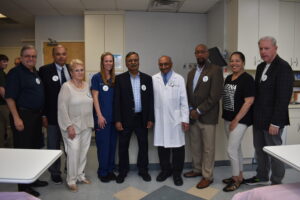

Guests had the opportunity to tour the facility, and members of the Township Committee interviewed Dr. Samiappan Muthusamy and Dr. Pradeep Mahal to commemorate the milestone.

The celebration was a heartfelt tribute to the physicians, nurses, and staff whose unwavering dedication and compassionate care have served patients for three decades.

Congratulations to the entire Endo-Surgi Center team on this incredible milestone! Here’s to many more years of exceptional care and continued excellence.

Filed Under: News Tagged With: 2338

Hudson Crossing Surgery Center Supports Walk to Cure Arthritis

June 8, 2025 by Emily Grant

On Saturday, June 1, team members from Hudson Crossing Surgery Center proudly participated in the Walk to Cure Arthritis at South Mountain Recreation Complex. The event brought together healthcare professionals, patients, families, and supporters to raise awareness and funding for arthritis research and joint health initiatives.

By hosting a booth and joining the walk, our team helped support the Arthritis Foundation’s mission to find a cure and improve the lives of those affected by arthritis, the nation’s leading cause of disability.



We thank everyone who stopped by our booth, walked alongside us, or supported the cause from afar. At Hudson Crossing Surgery Center, we are dedicated to helping patients get back to the things they love by improving joint health and mobility.

Learn more about how Hudson Crossing can help you return to an active, pain-free life.

Filed Under: News Tagged With: 2268

Relieving Pain, Restoring Confidence: A Q&A With a Breast Reduction Specialist

June 5, 2025 by Emily Grant

During the past two decades, board-certified plastic surgeon Forrest S. Wells, MD, has performed thousands of breast reduction surgeries, primarily at Ocean Springs Endoscopy and Surgery Center. Also known as reduction mammoplasty, this procedure removes excess breast tissue, fat and skin to reduce the size and weight of the breasts.

“Performing breast reductions has become one of my favorite surgeries,” Dr. Wells said. “I receive a lot of affirmation postoperatively, which makes me feel good about the service I am providing.”

Dr. Wells specializes in the latest plastic surgery techniques. A 1995 University of Alabama School of Medicine graduate, Dr. Wells continued five years of general surgery training in Birmingham, Alabama, and served as chief resident at Baptist Health Systems his last year. After completing his plastic surgery training at the University of Illinois in Chicago, he moved back to Ocean Springs on the Mississippi Gulf Coast in 2003 to begin his practice.

As the only plastic surgeon at the time in Jackson County, Dr. Wells built a strong cosmetic practice with a wide range of procedures. Today, his focus has shifted to growing his breast-reduction practice to help patients improve their quality of life.

Q: What are the top three reasons patients seek breast reduction surgery?

A: The top three are discomfort, discomfort and discomfort. But there are other reasons that should be mentioned.

The first one that I mentioned, discomfort, is a common complaint because the patient’s large breasts are pulling down and causing back and neck pain. Fungal infections in the fold under the breast are very common for people that have this problem.

There are other reasons, too, particularly with younger patients. It’s not just a physical aspect. There are also psychological and social components, as well. It’s not just discomfort.

As an example, consider high school students who can’t play sports and enjoy other activities because of their large breasts. It’s sort of awkward for young ladies in their teenage years. Their peers are not as mature as they could be about that, and they often get comments. Certainly, mothers tell me that their daughters wear jackets during the summertime because of their large breasts.

Q: Does insurance cover this procedure?

A: I think probably most doctors do know that there is a breast reduction surgery that is available that gives tremendous results, but a lot of them don’t know that insurance covers it. Certainly, many women that have large breasts and would benefit from breast reduction do not know that there’s an option out here, and a lot of them don’t know that insurance covers it in many circumstances.

If you call my office, we can help you determine whether your insurance covers the procedure.

Q: What are some benefits patients experience following this procedure?

A: In their teenage years, patients are quiet, but their mothers are very vocal, and they’re telling me “I got my girl back again. She’s playing soccer, and she’s able to participate in the band, and she’s not wearing a jacket during the summertime, and she’ll go to swimming pool parties with her friends. She can find a prom dress that fits.” All these things that so many people just take for granted. Young ladies, girls with very large breasts, have problems in this area.

Then, as patients get older, they’re not playing soccer in high school anymore, but they might enjoy playing tennis. They might enjoy playing golf. They might like to jog. All that becomes possible again.

Even if they’re not very active, simply not having fungal infections is a great relief. They all hate summertime, because that’s when they get yeast infections underneath their breasts, and they’re sweating. It’s just so uncomfortable.

And, no matter what time of year it is, the back and neck pain is always there. They say they can’t wait to get home and take off their bra and lay down, and that all just goes away after the procedure. Patients say in the first post-operative appointment that they already notice an improvement in their neck and back pain in the first few days.

Probably an important part of this operation to discuss that it’s not just relief of the weight, there’s a cosmetic component. Usually, women with very large breasts also have very ptotic (droopy) breasts. This weight over years causes ptosis (droopiness), the degree of ptosis contributes to the back and neck symptoms along with the weight. Therefore, a lift is performed as well as a reduction that is not just cosmetic but also a very important therapeutic benefit of the operation.

Q: Are there criteria to qualify for these procedures?

A: It depends.

So, if you’re going through insurance, there are criteria that have to be met. Insurance often covers this surgery. It’s a scale. So, it’s based on your height and your weight. A certain amount of weight has to be removed from each breast to qualify for this surgery.

The vast majority of women that come to see me for a breast reduction can easily meet their insurance requirement, and most often exceed them.

When I’m seeing patients with insurance, they’re very concerned about what size they will be. That’s not an issue post-operatively. I’ve never had a woman, after doing thousands of these, ever tell me, “I wish I was smaller. I wish I was bigger.” Afterwards, they’re just very happy with the results and the release of symptoms.

When the procedure is not covered by insurance, then there are no criteria. The decision is made by me and the patient: what they would like or expect, in general.

Q: What is your general approach when preparing for a breast reduction procedure at an ASC?

A: Typically, when I see a patient for the first time for a breast reduction, we have an initial meeting where they get a general outline of the procedure, the recovery, possible complications, what to expect, etc.

And, in fact, we made a video at my office using my staff that explains the process to get your insurance approval. We also discuss what to expect on your day of surgery, the first two days after surgery, the first two weeks after surgery and the next couple of months after surgery.

We typically have three appointments before we do a surgery. And, because I’ve done so many surgeries, it’s gotten to be sort of routine here.

I always do a breast reduction on a Tuesday. I see the patient the day before on a Monday to put the markings on that we’ll use during the operation. We always see them back on a Thursday — postoperative day two — to see if everything is routine, which it is the vast majority of the time. We see them two weeks later and then three months later.

Q. If someone is considering breast reduction surgery, what would you say are the top reasons to choose an ambulatory surgery center?

A: It is my opinion that if you can safely recover at home, it is more convenient to do so and safer to do so certainly. The ASC is a setting where it is geared for patients to go home and recover at home, and everything is more efficient when we are just meeting that requirement and can focus on that. For an ASC setting, it can be less expensive if you have a high deductible, or copays, and it’s certainly more convenient to have it done in an outpatient surgery center.

Q: What do you believe sets Ocean Springs apart from other facilities?

A: I know we have an excellent staff, and I’m really thrilled. I’ve been here for almost 23 years. We’ve had good staff throughout the years, but at this point, I am as pleased as I ever have been. I would probably say the staff is set above, and right now, it is particularly good, and there’s been a lot of consistency.

Q: Why do you choose to perform breast reduction surgeries?

A: There are probably two reasons why. The first is I have no other procedure where my patients are as happy with the results afterwards. It is life-changing for patients. Often, people have suffered with this problem for 20 to 30 years and have it done.

So, I like the variety in ages of the patients that I perform reductions on. I have performed reductions on patients as young as age 13 and as old as 70. I certainly like the patient satisfaction afterwards. It is good to hear some say, “You have changed my life. Thank you very much.” That is very reaffirming for me as a doctor.

Probably the other reason is the staff here. It’s just like anything else. You do a lot of these procedures; you get very good at it. And we’ve done thousands of breast reductions here at the surgery center. So, not just me, but also the nursing staff is very familiar with this operation, and we do it very efficiently and have very good results.

Filed Under: News Tagged With: 2306

Don’t Let Your Stomach Ruin Your Summer Trip: 6 Simple GI Tips for Travel Digestive Health

June 2, 2025 by Emily Grant

If you’ve ever had your beach day sidelined by bloating or your dream dinner ruined by an unexpected bout of heartburn, you know travel can take a toll on your digestive system. Stomach issues—whether you have a gastrointestinal disorder or run into digestive discomfort while traveling—can hamper your vacation…but they don’t have to.

With these simple real-world GI-friendly steps, you can help keep your stomach feeling its best so you can enjoy your vacation to the fullest (no drastic diet required):

1. Don’t skip hydration—especially on planes and beach days

Travel, sun, and even air-conditioned hotel rooms can leave you dehydrated. Dehydration can slow down digestion, leading to constipation and overall discomfort.

Your gut needs water to keep things moving smoothly (literally). Aim to drink more water than usual, especially if you’re flying or spending long days in the sun—or drinking alcohol. Bring a reusable water bottle with you: it’s a simple way to stay on top of hydration.

2. Pack smart snacks and include fiber when you can

Yes, airport snacks and road trip treats are part of the fun—but balance is key. Many times on vacation, stomach issues pop up because you’re eating differently. Your gut relies on fiber to clean things out and still needs it on vacation.

Toss a few fiber-friendly options like trail mix, dried fruit (in moderation), or granola bars into your bag, as long as your normal diet allows these. And choose fruits and vegetables with your meals whenever possible. These can help keep things regular without needing a drastic dietary shift.

3. Listen to your gut (Literally)

Vacation schedules are often packed, but don’t ignore your body’s cues. If you feel bloated, sluggish, or unusually gassy, take it as a sign to ease up on rich foods. If you must have them, eat in smaller amounts and be sure to balance them with the things that make your gut feel better.

It can be easy to overeat on vacation, so if you’re prone to feeling uncomfortable, ask for a half-portion or split a meal with someone else.

And don’t forget to give your body a bit of rest when it’s needing one. A walk after a heavy meal or a probiotic-rich snack like yogurt can help recalibrate your gut.

4. Prioritize sleep and movement

Your digestive system loves routine. Time zone changes, erratic meals, and late nights can throw off your internal clock. While it’s okay to stay up for that sunset cruise, try to keep sleep somewhat consistent, and squeeze in movement where you can: Walking tours, beach strolls, or even light stretching in the hotel room all help digestion to keep things moving.

5. Be smart with local cuisine

One of the joys of travel is trying new foods, but it’s wise to be cautious, especially when it comes to street food or raw dishes in places where sanitation may be different from what your system is used to.

A good rule: when in doubt, go for cooked, peeled, or bottled.

6. Bring a travel-size digestive toolkit

Be prepared for any possibility so you’re not caught in a bind that sours your vacation. A small kit with over-the-counter antacids, a fiber supplement, anti-diarrheal medication, and a mild laxative can be a lifesaver if you’ve taken them before and talked it over with your doctor.

If you already take probiotics or medications for IBS or reflux or other gastrointestinal disorders, make sure you’ve packed enough for the trip—with extras, just in case.

When to seek help

If you find yourself dealing with persistent symptoms during or after a trip—like prolonged diarrhea, severe abdominal pain, or ongoing constipation—it’s worth checking in with a GI specialist. At Gastrointestinal Specialists, P.C., we’re here to help you get back to feeling your best.

Thinking ahead? If you’re overdue for a colonoscopy or managing a chronic GI issue, contact us to schedule your appointment before you head out of town. Our on-site surgical center in Troy, MI, makes it easier, faster, and more affordable than a hospital setting.

Filed Under: News Tagged With: 2110

Is It Time for Cataract Surgery? Signs You Shouldn’t Ignore

June 1, 2025 by Emily Grant

Cataracts are a common part of aging. Recognizing the signs early can help you take steps to restore clear vision. Delaying treatment too long can impact your safety, independence and overall quality of life.

What Are Cataracts?

A cataract is a condition where the naturally clear lens of your eye becomes cloudy, making it harder to see clearly, especially in certain lighting conditions. Over time, cataracts can interfere with your ability to read, drive and enjoy everyday activities.

The Centers for Disease Control and Prevention reports about 20.5 million people in the U.S. aged 40 and older have cataracts. June is Cataract Awareness Month. During this time, we focus on the symptoms and treatment of the main cause of vision loss in the U.S.

When to Visit Your Eye Doctor

Changes in your vision can raise the risk of falls, accidents and injuries, especially for older adults. Here are some cataract signs and symptoms that may indicate you need to talk to your eye doctor:

  • Cloudy, blurry or dim vision — You may feel like you are constantly looking through a smudged window or foggy glasses.
  • Difficulty seeing at night — Driving has become stressful due to low visibility or increased glare.
  • Glare or halos around lights — Street lights, headlights or lamps may seem overly bright with halos around them, especially at night.
  • Colors look faded or yellow — Cataracts can dull your color perception, making everyday scenes look less vibrant.
  • Frequent changes in your prescription — You think you need new glasses/contacts often but still are not seeing clearly.
  • Double vision in one eye — This can possibly be an early sign of a cataract forming on the lens.

The Sooner You Act, the Better the Outcome

Early detection and prompt treatment are critical to restore your vision and improve your quality of life.

A comprehensive eye exam can help determine to what degree cataracts are affecting your vision. Your ophthalmologist will check your vision and test for common eye conditions like cataracts, glaucoma and macular degeneration. Then, you and your doctor can determine if cataract surgery is right for you.

Cataracts will not go away on their own. Cataract surgery restores clear vision, keeping you safer at home, on the road and in your daily activities. Eye doctors perform about four million cataract surgeries every year in the U.S. This is the most common and one of the safest surgical procedures.

Benefits of cataract surgery may include the following:

  • Clearer vision and sharper focus
  • Brighter, more vibrant colors
  • Improved night vision
  • Increased confidence and safety while walking or driving
  • A more active and independent lifestyle

Delaying surgery too long may make the cataracts more advanced and harder to remove. This can slightly increase risks or lengthen recovery time. Therefore, it is important to discuss the best treatment schedule with your eye doctor.

Choose a Lens That’s Right for You

During cataract surgery, your doctor removes the cloudy lens of your eye. The lens is replaced with an artificial, permanent intraocular lens (IOL). Depending on your vision needs and budget, IOL choices include the following:

  • Monofocal lenses are the most common and are usually covered by insurance. You will likely still need glasses or contacts for some activities.
  • Astigmatism-correcting lenses (Toric) can give you sharp distance vision. You may still need reading glasses after surgery.
  • Multifocal lenses may reduce your need for glasses altogether, especially for reading. Insurance does not cover these IOLs, so they cost more out of pocket. You may not need to buy glasses or contact lenses again.

Talk with your eye doctor to find the lens that is right for your lifestyle and vision goals.

Focus on Your Eye Health. Schedule an Appointment.

If vision problems are impacting your life, now is a great time to explore treatment options. Our experienced, board-certified eye doctors welcome new patients.

When you and your eye doctor determine you need cataract surgery, our ambulatory surgery center is …

  • Convenient and efficient.
  • Often lower in cost than hospitals.
  • Focused on patient comfort and personalized care.

If you have met your health insurance deductible, your out-of-pocket costs for cataract surgery may be lower. Scheduling your procedure before the end of the year can help you make the most of your health plan benefits.

A better quality of life begins with clearer vision. Do not delay getting the eye care you need. Call today to schedule an appointment.

Filed Under: News Tagged With: eye

A New View on Life: Patient Grateful for the Gift of Sight

May 28, 2025 by Emily Grant

Watching Broadway musicals holds special meaning for Rosalie Rhodes after receiving the gift of sight through organ donation.

The 77-year-old retired probation officer recently underwent a corneal transplant. Now, Rhodes and her sister enjoy theater performances together near Rutherford, New Jersey.

“We saw ‘Jersey Boys.’ It was wonderful for me to see, to hear it,” she said. “I’m able to walk and go up and down the stairs and to walk down the aisle. I’m grateful that these things are happening, and I’m able to do it.”

Bell’s Palsy Leads to Left Eye Corneal Damage

Diagnosed a year ago with Bell’s palsy, Rhodes experienced paralysis or weakness on the left side of her face.  The neurological disorder made closing her left eyelid difficult. This led to exposure keratitis, a condition where the cornea dries out. The cornea is the transparent, dome-shaped outer layer of the eye that bends light and helps you focus.

A specialist sewed her left eye closed to allow it to heal, but her vision did not improve. Rhodes’ condition worsened and eventually resulted in vision loss.

“My vision was so impaired,” Rhodes said. “They decided that I needed a corneal transplant.”

Rhodes was referred to ophthalmologist Joseph A. DeLuca, MD, FACS, for evaluation.

“She developed an ulcer of the cornea inside the eye because she could not close her eyelid,” Dr. DeLuca said. “They treated the ulcer until she was healed, but that left a scar. It left neovascularization of the cornea. Her sight was compromised a great deal.”

​​Corneal neovascularization is the abnormal growth of blood vessels in the cornea. In some cases, this condition can result in corneal swelling and vision loss.

“[Rhodes] could have left it alone, and then the vision would have just been what it was, but she was motivated,” Dr. DeLuca said. “She chose to have a corneal transplant.”

Organ Transplant Restores Patient’s Vision

Doctors perform more than 40,000 corneal transplants annually in the U.S. Corneal transplant surgery, or keratoplasty, replaces a damaged or diseased cornea with healthy corneal tissue from an organ donor.

After several weeks, the Lions Eye Bank for Long Island notified Dr. DeLuca’s office about a potential corneal tissue donor. A 24-year-old man had passed away, and his family opted for organ donation.

“He wasn’t 70 years old or 50 years old; he was 24,” Rhodes said. “I am so grateful to the parents; they were so incredibly wonderful to do this.”

The next day, Rhodes underwent a penetrating keratoplasty (PK) at an AMSURG ambulatory surgery center (ASC). During this procedure, Dr. DeLuca removed her damaged cornea then sewed a clear donor cornea into place.

More than 97 percent of corneal transplants successfully restore the recipient patient’s vision. Rhodes returned a day later for a post-op exam with Dr. DeLuca.

“I could see! That was the first thing,” Rhodes said. “I was able to see color … I can see letters if they’re dark and on a light background. I will never have vision like I had prior to all of this, but it is a thousand percent better than I anticipated.”

Patient Enjoys Independence, Improved Quality of Life

Full vision recovery for corneal transplant recipients can take up to a year for some patients.

“The patient has to agree that when you do a full thickness [corneal] transplant, there’s a lot of post-operative care,” Dr. DeLuca said.

Currently, Rhodes administers daily eye drops to treat dry eye, a condition where the eyes do not produce enough tears. Dry eye is a common temporary side effect after a corneal transplant.

Dr. Joseph DeLucaConsidering the complexity of her case, Dr. DeLuca is pleased with Rhodes’ overall recovery.

“She’s a grand slam. She’s not wearing glasses, and she’s 20/25 after full thickness keratoplasty. Just exceptional,” he said. “It just went flawlessly, really.”

Through her gift of sight, Rhodes now manages grocery shopping without assistance and reads books with clear vision.

“I was able to do food shopping by myself. I walked the entire length and width of the store twice,” she said. “Now, I’m able to read — something I hadn’t been able to do in a long, long time.”

Rhodes said she appreciates Dr. DeLuca’s expertise and professionalism to restore her vision.

“I am so grateful to him and God,” she said. “I had God on my shoulder, and so did he.”

To express her heart-felt appreciation for the organ donation, Rhodes wrote a letter to the family thanking them. She submitted the letter to the eye bank for delivery.

“They gave me a chance to see out of that eye. I can’t thank them enough,” Rhodes said. “My heart goes out to them for their loss.”

Consider Eye Surgery at an Ambulatory Surgery Center

Ambulatory surgery centers offer same-day, high-quality procedures with the most advanced technologies available. ASCs provide significantly lower costs than other facilities for the same procedure. Patients then recover at home.

Rhodes praised the ASC staff and clinical and surgical team for their work during her corneal transplant.

“They were so wonderful before the surgery, during [and] after,” she said.

May Is Healthy Vision Month. Schedule Your Eye Exam.

During May — Healthy Vision Month — focus on protecting and preserving the health of your eyes. Schedule comprehensive eye exams for you and your family before problems arise. Your eye doctor will evaluate your current eye prescription and check your visual acuity. They will screen you for eye conditions like cataracts, glaucoma and macular degeneration.

Have you met your health insurance deductible already? If you need surgery, like cataract surgery or a corneal transplant, schedule it at our ASC before the year ends. This way, you can make the most of your health plan’s benefits. Prioritize your eye health; call today to make an appointment.


This article is designed for educational purposes only. The information provided should not be used for diagnosing or treating a health concern or disease. It is not a substitute for professional care. If you have or suspect you may have a health concern, you should consult your healthcare provider.

Filed Under: News Tagged With: eye

  • « Previous Page
  • 1
  • …
  • 4
  • 5
  • 6
  • 7
  • 8
  • …
  • 41
  • Next Page »