Take a Google 360 Virtual Tour of North Shore Endoscopy Center

October 20, 2025 by Emily Grant

Lake Bluff, IL – Step inside the North Shore Endoscopy Center and explore our state-of-the-art facility from the comfort of your home with our new 360° virtual tour. Known for our commitment to high-quality healthcare, we take pride in maintaining a welcoming and serene environment that ensures our patients’ peace of mind.

Take the Google 360 Tour

Get a closer look at the exceptional care we provide with our interactive 360° tour, captured by a certified Google photographer. Journey through our inviting reception area, advanced procedure rooms, and peaceful recovery spaces—all designed with patient comfort as a top priority. At North Shore Endoscopy Center, transparency is key. We believe that by offering a full view of our facility, you can feel confident and at ease even before stepping through our doors. This virtual tour aims to reduce any pre-visit worries and build trust by showcasing our commitment to patient care.

Why Choose Us?

  • Modern, Welcoming Environment: Our facility is carefully maintained to ensure cleanliness and comfort, offering a positive experience from the moment you enter.
  • Tailored, Compassionate Care: Our dedicated team is focused on providing personalized, patient-centered care to meet your individual healthcare needs.
  • See Before You Arrive: Through our virtual tour and photo gallery, you can get a feel for our center before your visit, promoting confidence and informed decision-making.

At North Shore Endoscopy Center, we blend top-tier medical care with a calm, comfortable atmosphere designed to ease your experience. We invite you to take the tour and discover how we’re committed to your well-being at every step.

Filed Under: News Tagged With: 2148

Why Waiting Until You Have Symptoms Could Be Risky: Silent Signs of Colon Cancer Everyone Should Know

October 12, 2025 by Emily Grant

“I feel fine. Why would I need a colonoscopy?”

We hear it all the time. And we get it; No one wants to think about cancer, especially when you’re not feeling sick.

But here’s the truth: colon cancer can grow quietly, with few or no symptoms until it’s in a more advanced (and harder to treat) stage.

That’s why regular screening (with a colonoscopy) is so powerful…and potentially life-saving. Catching precancerous polyps during a colonoscopy before they turn into cancer is one of the best tools we have, yet many people delay screening simply because they feel fine.

At Gastrointestinal Specialists, P.C. in Troy, Mich., we want to change that.

Colon Cancer: The Silent Invader

Colon cancer is the second leading cause of cancer death in the U.S., yet you can prevent colon cancer. How? With a colonoscopy that helps us find and remove polyps before they become a problem.

But what makes it tricky is that colon cancer often develops without major warning signs, so you may not think you have to get a colonoscopy. Then when symptoms do appear, the disease is usually more advanced. That’s why waiting for symptoms is a risk you shouldn’t take.

The best attack? Have a colonoscopy by age 45, or sooner if you have family history or risk factors. (Learn about what your first colonoscopy is like here)

7 Silent (or Easy-to-Miss) Signs of Colon Cancer

While many people won’t have symptoms at all in the early stages, some reasons you may need a colonoscopy can include:

  1. Unexplained fatigue: Feeling unusually tired, even after rest.
  2. Changes in bowel habits: Ongoing constipation, diarrhea, or a change in stool shape or frequency.
  3. Blood in stool:  Sometimes visible, sometimes microscopic. Either way, it’s a red flag.
  4. Abdominal cramping or discomfort:  Especially if persistent or unexplained.
  5. Unintended weight loss: Losing weight without trying should never be ignored.
  6. Feeling like your bowel doesn’t empty completely: A sense of incomplete evacuation can be a subtle sign.
  7. Low iron levels or anemia: Often discovered during routine bloodwork; may signal chronic bleeding in the colon.

Remember: These signs don’t always mean cancer. But they do mean you should speak with a GI specialist now and not wait.

The Power of Prevention: Get Screened at 45 (or Sooner If You’re High Risk)

If you’re 45 or older, the time to schedule your first colonoscopy is now…even if you feel great.

You may also need earlier or more frequent screenings if you have a family history of colon cancer or risk factors.

Not sure what your risk is? We’re here to help assess and guide you.

Our On-Site Surgical Center: Easier, Faster, and More Comfortable

We know “hospital” is not everyone’s favorite word — so here’s good news. You don’t HAVE to have a colonoscopy at a hospital.

At Gastrointestinal Specialists, P.C., our on-site surgical center offers:

  • Lower costs than hospital-based procedures
  • Shorter wait times
  • Quieter, more private experience
  • Procedures performed by board-certified gastroenterologists you already know

It’s colonoscopy, made convenient…and personalized.

The Bottom Line: Schedule Your Colonoscopy Now

Colon cancer doesn’t always make a dramatic entrance. That’s why waiting for symptoms is a gamble you don’t have to take.

A 45-minute screening could give you years of peace of mind or even save your life.

Let’s stop colon cancer before it starts. Schedule your colonoscopy today.

Filed Under: News Tagged With: 2110

Patient Finds Answers Through Timely GI Evaluation at ASC

October 7, 2025 by Emily Grant

Ohio University student Madi Brown leads an active lifestyle. She stays busy studying communications, working in tourism and caring for her cherished 10-year-old beagle mix, Smoke.

Behind her bright smile and cheerful outlook lives a story of resilience. Growing up, Brown faced chronic health challenges, including autoimmune disorders and irritable bowel syndrome (IBS).

This past spring, Brown, 21, started vomiting unexplainably and for extended periods of time. Her doctors proposed causes like stress, a virus or even food sensitivities but offered no definitive diagnosis.

“They tested me for everything. I did so much blood work, but nobody could really figure out why I was throwing up,” she said.

GI Procedure Recommended for Diagnosis

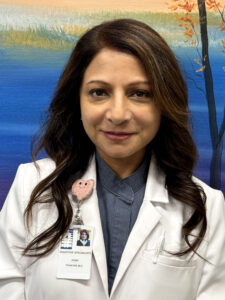
Jigna Thakore, M.D. After months of uncertainty about her health, Brown scheduled a visit with her board-certified gastroenterologist Jigna Thakore, M.D.

“When she came in May, she was having a lot of nausea, vomiting, heartburn-type symptoms and just pain in her upper abdomen,” Dr. Thakore said. “We needed to figure out whether it’s food allergy related versus acid reflux, versus if there’s an infection in her stomach, a gluten allergy.”

Brown underwent an ultrasound and a HIDA (hepatobiliary iminodiacetic acid) scan to evaluate her gallbladder and bile duct function. Her results were normal.

To diagnose other conditions of the upper digestive tract, Dr. Thakore recommended Brown undergo an esophagogastroduodenoscopy, or EGD.

“There’s no CT scan or ultrasound or MRI or any imaging test that can give you the same information as an EGD for the upper gastrointestinal tract because it’s a camera inside you. It’s physically helping us see the actual tissue,” Dr. Thakore said. “When the imaging test is done, it shows pictures in shades of gray. Whereas with the EGD, we see the tissue and can biopsy it to test its health.”

Brown scheduled the procedure at an ambulatory surgery center (ASC) near her parents’ Dayton, Ohio, home. Although anxious about her initial endoscopy, Brown said the medical team detailed the process and offered encouragement.

“I don’t like to surrender control … So, being put to sleep and just not being aware and the idea of just complete oblivion freaks me out unnecessarily,” she said. “The care team … picked up on that, and they made it so easy.”

During Brown’s sedation, Dr. Thakore used a slender, flexible instrument known as an endoscope to inspect the lining of her esophagus, stomach and the upper section of the small intestine.

Biopsies of the esophagus revealed gastritis, indicating inflammation in the lining of the stomach.

“The biopsies didn’t show any infection, so that would show that that’s all acid related,” Dr. Thakore said. “Biopsies in the small intestine were negative for gluten allergy or celiac disease. So, we’ve been working on her acid-related symptoms as the cause of what she was experiencing.”

Dr. Thakore also discovered a minor hiatal hernia, where Brown’s stomach extends slightly into her chest area.

“By itself, it’s not dangerous, especially when it is small, but she will have more reflux from it,” Dr. Thakore said. “That is part of her issue with nausea, vomiting.”

To heal Brown’s gastritis and lower her stomach acid would take about five to six weeks. Dr. Thakore prescribed medications for heartburn and nausea for her to take as needed until her next appointment.

Managing IBS Symptoms; Improving Gut Health

IBS affects up to 45 million Americans like Brown, who endure frequent stomach pain with diarrhea, constipation or both. To reduce IBS symptoms, Dr. Thakore recommended Brown focus on improving her gut health.

“Often, these symptoms can be improved, and these conditions can be improved with fiber alone,” Dr. Thakore said. “Over-the-counter fiber, such as psyllium husk or guar gum, … or even a high-fiber diet is helpful. Up to 20 to 30 grams of fiber a day is what the gut bacteria need to do their job.”

Gut bacteria (microbiomes) reside in the gastrointestinal tract. They assist the body with digestion, nutrient production, immune system regulation, metabolic health and more.

“I don’t know if young people understand how important your gut health really is and how impactful that is for your entire body,” Brown said. “The gut says a lot, and when you start to care for that, you’ll notice other parts of your life improving.”

ASCs Care for Patients First

Ambulatory surgery centers offer patients same-day procedures using advanced technology in a comfortable setting with shorter waiting times, often at lower out-of-pocket costs. Patients have the convenience of recovering at home.

“This is a teamwork effort. We are very fortunate to have a fantastic staff,” Dr. Thakore said. “There’s just a culture of the patient coming first and making [them] better. That’s why we exist. So, that’s what we carry through.”

Following her positive experience, Brown said she would recommend ASCs to others.

“There were so many good things that were happening during my experience before, during and after the procedure,” she said. “The little moments of Dr. Thakore holding my hand or the anesthesiologist being just so kind and attentive or the nurse answering my questions in the beginning, all of these little things added up to a really good experience that could so easily have just been mediocre or bad.”

Doctors determine whether patients are suitable for outpatient surgery based on their age, existing medical conditions and the support they receive at home.

“If you’re safe enough to have an outpatient procedure, that’s the best option,” Dr. Thakore said. “We’re very timely; we’re efficient.”

Schedule an Appointment to Discuss GI Issues

You can make positive choices to benefit your digestive health. Schedule an appointment to talk to your doctor about any GI issues you may be experiencing. Your doctor may suggest that you schedule a procedure, like an EGD or colonoscopy, to determine the cause.

Discuss whether lifestyle changes, such as losing weight, improving diet and exercising, can alleviate symptoms or decrease disease risk.

“Don’t ignore your symptoms,” Dr. Thakore said. “We care. You’re important. If you’re not taking care of yourself, who will, right? So, just make time to do that.”

As she adjusts to her healthier lifestyle, Brown encourages her peers to examine their life choices, too.

“Being a young person, it’s important to prioritize your health, but you also have to prioritize other parts of your life and your well-being and balance those things,” she said. “I really encourage them to find that balance and ride that fine line, … and eventually, things will fall into place.”

Dr. Thakore praised Brown for prioritizing her health for a better quality of life.

“Madi’s a fantastic, bright young lady, and I’m so proud of her for reaching out and not ignoring her symptoms,” she said. “It’s good for her to come in and work with us. And as a team, we can get her better.”


This article is designed for educational purposes only. The information provided should not be used for diagnosing or treating a health concern or disease. It is not a substitute for professional care. If you have or suspect you may have a health concern, you should consult your healthcare provider.

Filed Under: News Tagged With: gi

Eye Surgery Center of East Tennessee Nominated for Best of Tennessee Awards

September 19, 2025 by Emily Grant

The Eye Surgery Center of East Tennessee is proud to announce our nomination in the Best in Tennessee Awards! For more than 25 years, our center has been dedicated to providing safe, high-quality, outpatient surgical care focused exclusively on vision health.

Recognized as a Cataract Innovator, our team of board-certified ophthalmologists and compassionate staff deliver exceptional care across a wide range of procedures from cataract surgery and corneal transplants to glaucoma treatments and eyelid surgery.

As an AAAHC-accredited ambulatory surgery center, we hold ourselves to the highest national standards. Our patients know that when they walk through our doors, they will experience compassionate, personalized care designed to restore and protect their vision.

We are deeply honored to serve Knoxville and the surrounding communities, offering cutting-edge technology and proven surgical expertise in a patient-focused setting. Every procedure we perform reflects our mission: to safeguard sight, restore clarity, and improve quality of life.

Now, we need your support! Help us shine a spotlight on the work we do every day by casting your vote in the Best of Tennessee Awards.

? Vote for Eye Surgery Center of East Tennessee here under “Surgery Practices.”

Your vote is more than recognition — it’s a celebration of 25 years of compassionate care, innovation, and dedication to vision health in our community.

Filed Under: News Tagged With: 2018

The Endoscopy Center West Nominated for Best in Tennessee Award

September 19, 2025 by Emily Grant

We are proud to announce that The Endoscopy Center West has been nominated for the Best in Tennessee Award by theguidetennessee.com!

As an outpatient endoscopic facility, our mission is simple: to provide safe, high-quality, patient-centered care to our Knoxville community. From colonoscopies and flexible sigmoidoscopies to upper endoscopies and advanced GI procedures, our experienced, board-certified physicians are dedicated to early detection, prevention, and treatment of digestive diseases.

? Why Choose Us

  • Accredited by the Accreditation Association for Ambulatory Health Care (AAAHC), ensuring we meet the highest standards in safety and quality.

  • Compassionate, patient-first approach where care is never rushed.

  • A highly engaged team committed to exceptional outcomes and patient satisfaction.

  • Convenient locations across Knoxville, including Weisgarber Road, Turkey Creek, and Powell.

? Why Your Vote Matters
Every vote helps shine a light on the life-saving work our team does every day. Colon cancer is one of the most preventable cancers — and at The Endoscopy Center, every colonoscopy and every polyp removed represents a life potentially saved.

? Vote Today!
Click here to vote for our center to win the Best in Tennessee Awards

Together, we can continue to raise awareness, expand access to quality care, and keep Knoxville families healthy.

Filed Under: News Tagged With: 2001

Vote for Julius Rios, a HeroesFIRST Nominee

September 17, 2025 by Emily Grant

We are proud to announce that Julius Rios, Material Manager and Lead Endoscopy Tech at TBEC, has been nominated for the ImageFIRST HeroesFIRST Award.

Julius has been with TBEC since February 2005, serving in both roles for more than 20 years. His dedication, loyalty, and drive have made him an essential part of our team. Julius trains new techs, provides in-services on new equipment, and is always available to support his peers. His hard work and commitment have made him an incredible asset to TBEC, and we are grateful for his continued service.

Now, Julius’ impact is being recognized on a national level through the HeroesFIRST program, which honors healthcare professionals who go above and beyond in patient care and teamwork.

Vote for Julius

Voting is now open for the 5th Annual HeroesFIRST Award. Please take a moment to support Julius by casting your vote!

?️ Cast your vote here: heroes.imagefirst.com
? Voting runs from September 17 to October 3, 2025. Winners will be announced on October 13, 2025 .

We are incredibly proud of Julius’ dedication and commitment to providing outstanding care, and this nomination reflects the remarkable impact he makes every day. Please join us in celebrating Julius by casting your vote during the national campaign!

Filed Under: News Tagged With: 2129

Glaucoma: What You Don’t See Could Harm Your Vision

September 9, 2025 by Emily Grant

  • What is one of the leading causes of blindness in the U.S.?
  • What family of eye diseases is called the “sneak thief of sight”?
  • What eye condition damages the optic nerve, leading to permanent vision loss?

If you answered glaucoma for each of these questions, you are correct.

Glaucoma is one of the leading causes of blindness in the U.S. A 2022 study found the disease affects more than four million U.S. adults every year. Of those, about 1.5 million people had vision-affecting glaucoma.

During Healthy Aging Month, we should focus on steps to maintain clear vision as we get older. Learning more about conditions that affect our eyes, like glaucoma, helps us determine the best care to preserve our sight.

Researchers Study Eye Pressure

Glaucoma is a group of conditions that damage the optic nerve, the part of your eye that sends visual information to your brain.

Known as “the sneak thief of sight,” glaucoma can quietly damage your vision without any warning signs. By the time it’s diagnosed, permanent vision loss may have already occurred.

A recent study published in Ophthalmology Science, focuses on how elevated eye pressure changes blood vessels in the eye.

“If we can understand that, we can inform drug delivery to improve blood flow in the back of the eye,” Yi Hua, a University of Mississippi biomedical engineering professor, said in Medical Xpress. “That can slow down the progression of glaucoma.”

Researchers used advanced 3D imaging and glowing dye to track how blood flows through the eye at different pressure levels.

“By combining imaging techniques with 3D modeling, we gained a more comprehensive understanding of blood flow and oxygen distribution in the eye,” said Yuankai Lu, co-author of the study, in Medical Xpress. Lu is a postdoctoral researcher at the University of Pittsburgh.

The study showed extreme eye pressure resulted in a lack of oxygen in approximately 30 percent of the tissue in the optic nerve. According to the study, an oxygen deficit leads to cells dying and eventually loss of sight.

“The vision loss resulting from this damage cannot be recovered,” Ian Sigal, University of Pittsburgh associate professor of ophthalmology and bioengineering, said in Medical Xpress. “Hence, it is crucial to find ways to detect the disease and prevent the damage before it happens.”

Tests to Diagnose Glaucoma

Glaucoma does not have a cure. Vision loss caused by the disease cannot be restored. For most people, early detection through annual comprehensive eye exams and lifelong treatment can maintain vision.

During an exam, your eye doctor may use several tests to check for signs of glaucoma and other eye conditions. These tests measure the pressure inside your eye or intraocular pressure (IOP), your field of vision and the thickness of your cornea, which can affect eye pressure readings and help guide your care.

If glaucoma is found, your treatment plan may include prioritizing regular checkups and taking prescribed medication as directed.

Your eye doctor may also recommend one of several innovative procedures as part of your treatment. For example, Micro-Invasive Glaucoma Surgery (MIGS) targets areas of the eye that other surgeries don’t usually focus on, offering more choices for treatment.

Schedule Your Comprehensive Eye Exam

If you have certain risk factors for glaucoma, ophthalmologists may recommend comprehensive eye exams every six to 12 months for early detection.

You may be at risk for glaucoma if you are age 45 or older, have a family history of glaucoma, are a Black American, have diabetes, are nearsighted (myopic) or farsighted (hyperopic), or have a history of elevated intraocular pressure.

Healthy Aging Month reminds us that keeping our eyes healthy matters at every stage of our lives. During September, focus on eye care for yourself and your family. Schedule an appointment for a comprehensive eye exam today.

Filed Under: News Tagged With: eye

Dr. Supriya Rao Featured in NewsBreak: Expert Insight on Coffee and Crohn’s Disease

September 9, 2025 by Emily Grant

We’re pleased to share that Dr. Supriya Rao of Northeast Endoscopy Center was recently featured in a NewsBreak article titled “Is It Safe to Drink Coffee if You Have Crohn’s?”. The article explores how coffee consumption may affect individuals living with Crohn’s disease, a chronic inflammatory condition of the gastrointestinal tract.

Dr. Rao, a board-certified gastroenterologist, offered valuable insight into the variability of Crohn’s symptoms and the role diet can play in managing the condition. Her expertise helps readers better understand the complex relationship between diet and digestive health, especially for those navigating chronic GI conditions.

We thank Dr. Rao for sharing her expertise and helping to raise awareness around digestive health and chronic illness management.

Read the full article here.

Filed Under: News Tagged With: 2313

Dr. Chethan Ramprasad Shares Insight in National Health Article

September 8, 2025 by Emily Grant

We’re pleased to share that Dr. Chethan Ramprasad, gastroenterologist at Boston Endoscopy Center, was recently featured in a national article on StudyFinds.org. The article highlights research led by Dr. Ramprasad that explores how using smartphones while on the toilet may increase the risk of developing hemorrhoids.

This research helps raise awareness about how everyday habits — even ones we don’t think twice about — can affect our digestive health. Dr. Ramprasad’s contribution brings valuable knowledge to the conversation and supports our ongoing commitment to patient education and wellness.

We’re proud of Dr. Ramprasad’s work and the positive impact it’s making in helping people make informed choices about their health.

To learn more, read the full article here.

Filed Under: News Tagged With: 2261

From Heartburn to Colon Cancer: 7 Digestive Symptoms You Shouldn’t Ignore

September 4, 2025 by Emily Grant

When it comes to your health, your digestive system often sends out warning signals before small problems become big ones. Unfortunately, many people brush off gastrointestinal (GI) symptoms, dismissing them as “just something I ate” or “normal aging.”

But ignoring certain signs could mean missing early detection of lesser-known digestive conditions and serious conditions, including colon cancer.

Paying attention to these symptoms—and scheduling a visit with a gastroenterologist, since everyone should have a gastrointestinal doctor—can make all the difference.

Here are 7 digestive symptoms you should never ignore:

1. Frequent Heartburn or Acid Reflux

Occasional heartburn happens, but if you rely on antacids daily or experience symptoms more than twice a week, it may be gastroesophageal reflux disease (GERD). Left untreated, GERD can damage the esophagus and increase your risk of esophageal cancer.

2. Unexplained Abdominal Pain

Abdominal pain that persists or worsens could signal anything from ulcers to gallstones, or even inflammation in the intestines. A gastroenterologist can run simple tests to get to the root cause and get you on the path to feeling better.

3. Persistent Changes in Bowel Habits

If you notice chronic diarrhea, constipation, or a sudden change in stool shape or color, it’s worth checking out. Sometimes these symptoms point to irritable bowel syndrome (IBS), but they can also signal colon polyps or colorectal cancer.

4. Blood in Stool

This is one of the most important red flags. While blood in the stool may come from hemorrhoids, it can also indicate polyps, ulcers, or colon cancer. It’s never something to brush off, and the sooner we can determine the cause, the more effectively we can treat you.

5. Unexplained Weight Loss

Losing weight without trying may seem like a silver lining, but it could point to an underlying digestive condition like Crohn’s disease or celiac disease. Let’s determine the cause and find the best treatment for you.

6. Difficulty Swallowing

Struggling to swallow, feeling food get “stuck,” or experiencing pain or difficulty while swallowing should be evaluated and can be caused by something going on in your digestive tract, such esophageal strictures.

7. Family History of Colon Cancer or GI Disease

Even if you feel healthy, a strong family history means you should start colonoscopies earlier than age 45 (the standard recommendation). Preventive screening is the best defense, since colon cancer is preventable thanks to early detection through colonoscopies, and treatment.

Visit your Gastrointestinal Doctor

At Gastrointestinal Specialists, P.C. in Troy, Michigan, we’re here to help you understand when it’s time to see a gastroenterologist. Our team provides expert diagnosis and treatment in a patient-friendly environment. Plus, with our state-of-the-art on-site surgical center, you can schedule and complete your colonoscopy or other procedures more conveniently and cost-effectively than at a hospital.

Don’t ignore the signs. Schedule your appointment today to protect your health and your future.

Filed Under: News Tagged With: 2110

  • « Previous Page
  • 1
  • 2
  • 3
  • 4
  • 5
  • …
  • 87
  • Next Page »