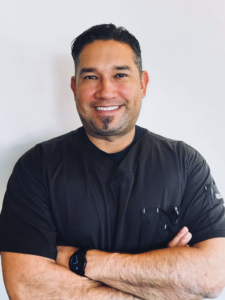
CRNA Week: Spotlight on Albert Romero

January 21, 2025 by Emily Grant

Albert Romero, CRNAAlbert Romero focuses on the well-being and care of patients at the Chattanooga Endoscopy Center in Tennessee. 

Romero is a Certified Registered Nurse Anesthetist (CRNA) and an affiliate of the AMSURG Anesthesia network. CRNAs are advanced practice registered nurses who are certified to administer anesthesia at U.S. medical facilities, including ambulatory surgery centers (ASCs). 

Having been affiliated with AMSURG Anesthesia since 2011, Romero said he prefers working in an ASC setting because it offers him great work/life balance. 

“As lead CRNA, AMSURG has been extremely professional and has always provided me with the tools necessary to become successful,” Romero said. “AMSURG excels in high-value care with excellent patient safety outcomes.”  

Honor Professionals during National CRNA Week 

During National CRNA Week (Jan. 19-25), the U.S. celebrates nearly 74,000 CRNAs and residents in nurse anesthesiology programs in the United States. This year’s theme is “CRNAs: Exceptional Care. Innovative Leaders.”   

CRNA services include pre-anesthesia evaluation, administering anesthetic, monitoring and evaluating a patient’s vital signs and managing the patient throughout surgery. CRNAs safely deliver more than 50 million anesthetics to patients each year in the United States. 

Ondee Whitman, AMSURG Anesthesia Services Associate Vice President, praised Romero and all CRNA teammates for their dedication, expertise and unwavering commitment to exceptional patient care.  

“This is a great opportunity to highlight our own outstanding CRNAs, whose expertise and compassionate care go above and beyond every single day,” Whitman said. “Whether it’s ensuring patient comfort before a procedure, providing expert anesthesia management or being a calm presence in the operating room, these individuals exemplify the very best in patient-centered care.”  

Filed Under: News Tagged With: 2063

Americans Are Waiting Too Long To Start Colorectal Cancer Screening

March 11, 2019 by Darkspire Hosting

Yet according to new data from AMSURG, a leader in the detection, prevention and treatment of colorectal cancer, most people wait until the age of 58 for an initial screening – 13 years after the recommended guidelines.

In recognition of National Colorectal Cancer Awareness Month, AMSURG today released proprietary data from approximately 1 million patient encounters during the past five years showing that more work is needed to encourage Americans to get screened at the recommended age. This year, more than 140,000 people in the U.S. are expected to be diagnosed with colorectal cancer. While research shows that younger adults are increasingly diagnosed, they do not start regular screenings until their late 50s when cancer is often more advanced.

“Colorectal cancer is the third most commonly diagnosed cancer and the second deadliest form in the U.S.,” said John Popp, M.D., Medical Director for AMSURG. “Having a screening during those 13 years can be life-changing. Screening is the most effective way to detect, prevent and treat colorectal cancer. These cancers typically develop during a 10- to 15-year period, and with early and regular screenings, growths can be removed before they become cancerous.”

If cancer is diagnosed early, it is easier to treat, and patients often have a shorter recovery time as well as an increased chance of survival. Colorectal cancer affects people of all genders, races and ethnicities and it often has no warning signs or symptoms until it becomes advanced. Risk factors can include a family history of colorectal cancer, inflammatory bowel disease, Crohn’s disease, diabetes and certain lifestyle habits.

“A screening colonoscopy is considered the gold standard,” said Colleen Schmitt, M.D., MHS, FASGE, FACG, Past President of the American Society for Gastrointestinal Endoscopy, Trustee and Vice Chair of the ASGE Foundation and a gastroenterologist at Chattanooga Endoscopy Center in Tennessee. “It is the most comprehensive because we can both detect and remove precancerous polyps during the procedure. In addition to being safe, colonoscopies enable us to evaluate the overall health of the colon and help patients treat any underlying conditions.”

People can decrease their chances of developing colorectal cancer by maintaining a healthy weight, eating a balanced diet, exercising regularly and having routine screenings.

Depending on a person’s age and health insurance policy, a screening colonoscopy may be provided free of cost.

AMSURG, an Envision Healthcare solution, provides nearly 1 million colonoscopies a year and is committed to helping patients develop appropriate care plans to prevent and treat colorectal cancer. To learn more about colorectal cancer and find a gastroenterologist, visit www.stopcoloncancernow.com.

Filed Under: News Tagged With: 2063