Summer Outdoor Exercises Benefit Your Joint Health

July 31, 2024 by Emily Grant

Daily exercise keeps joints flexible and strong, which can delay the progression of arthritis and prevent the need for joint replacement surgery.

Arthritis and Exercise

Pain is common in all forms of arthritis, but research indicates that regular physical activity can help delay the advancement of the condition and enhance joint mobility. Regular body movement helps improve balance, heart health and muscle strength.

“Our joints and muscles get nutrition through movement,” said A. Lynn Millar, PhD, a professor of physical therapy at Winston Salem State University in Winston-Salem, North Carolina. “Once you start to move around a little, you’ll improve the lubrication and circulation around that joint.”

Although it is crucial to stay active to alleviate arthritis symptoms, it is essential to cease activity if you experience severe or persistent pain. Stretching first can help reduce strain on joints and prevent injury, but you must listen to your body and take breaks as needed.

Exercising Outside Has Added Benefits

Exercise and spending time in nature both enhance brain cognition. However, the combined benefit of exercising outdoors has “an additive impact on brain function.”

A study published in Nature found that a 15-minute outdoor walk significantly improved attention and working memory compared to an indoor walk. The research concluded that, if pressed for time, people may benefit more from getting outside for a short walk than “hitting the gym.”

Types of Joint-Healthy Outdoor Activities

If you have been inactive for a while, you should begin by walking. Once you can work out for 35 to 45 minutes, you can begin to add intensity.

Here are 10 outdoor, joint-friendly activities that will improve your health and enhance cognition:

  1. Walking in an outdoor pool — Walking in the pool reduces joint strain by 50 percent compared to walking on pavement or grass.
  2. Cycling in the park — Biking works all muscle groups in the lower body. If you have back or knee problems, consider buying a recumbent bike.
  3. Yoga — Many health clubs offer outside yoga. Studies show yoga can reduce symptoms of fibromyalgia and rheumatoid arthritis.
  4. Bocce ball — If you have hip or knee pain, bocce ball can be a good option because you play the game in a mostly upright position.
  5. Golf — This activity has a double benefit. Swinging the club works your shoulders, legs and upper back. In addition, you’ll get in all your steps from walking between holes.
  6. Walking — Whether you are hiking a trail or strolling on the sidewalk of your neighborhood, walking will tone the muscles around arthritic joints as well as reduce mental stress.
  7. Outdoor Pilates — You can do Pilates in your own backyard with a mat and YouTube video. Work at your own pace and enjoy the spinal stretches and breath work.
  8. Tai chi — You can do standing moves if you are concerned about joint pain. You can always limit your range of motion.
  9. Shuffleboard — Playing outdoor shuffleboard works your arms and legs as you push the weighted puck forward.
  10. Swimming — This sport may be the perfect, whole-body workout. The water’s buoyancy reduces joint strain, yet you challenge every muscle group.

Aging and Arthritis Can Increase the Risk of Debilitating Falls

Falls are the leading cause of fatal and nonfatal injuries among seniors. More than 25 percent of Americans over 65 fall each year. Those who suffer from arthritis are even more likely to fall because arthritis causes pain, stiffness and decreased joint mobility.

Many seniors are afraid of falling, and they limit their daily activity level to reduce the risk of injury. Choosing a sedentary lifestyle usually causes further physical decline, loneliness and dependence on others.

Incorporating Physical Exercise into Your Day

A regular exercise program can help improve balance and coordination to prevent hip fractures and life-threatening falls. According to the Centers for Disease Control and Prevention, adults are advised to engage in at least 150 minutes of moderate-intensity physical activity each week, along with two days of muscle-strengthening exercises.

You can meet your activity goal by exercising 30 minutes a day for five days a week, 22 minutes seven days per week, or any other time increment that fits in your schedule. If you are trying to lose some weight to lessen the impact on your joints, your doctor can help you create a customized exercise plan.

Remember that any kind of movement can be exercise. Even gardening and house cleaning can provide an excellent, low-impact workout. Consider taking a walk during conference calls or asking a friend to go for a walk instead of going out to lunch. You can incorporate movement into most parts of your day if you are intentional.

Talk to an Orthopedist about Total Joint Replacement

Being physically active is the most effective non-drug treatment for osteoarthritis. If you feel pain when exercising, it’s best to see a doctor so you don’t cause further injury. An orthopedist can talk you through treatment options that will offer you pain relief and increased mobility.

You may want to consider total joint replacement to remove the damaged joint and replace it with an artificial one. Knee and hip replacements are common, safe procedures that have high success rates. If you have tried nonsteroidal anti-inflammatory drugs, weight loss, cortisone shots and physical therapy, talk to your orthopedist. You may be able to schedule a joint replacement before the year ends.

Filed Under: News Tagged With: ortho

Warm-ups Help Prevent Joint Injury When Playing Tennis and Golf

July 1, 2024 by Emily Grant

Tennis and golf can improve your fitness, but it is essential to warm up, stretch and wear proper footwear to protect your joints and prevent overuse injury.

Summer Sports Enhance Physical and Mental Wellness

Summer is an ideal time to try outdoor sports like tennis and golf. Engaging in these activities can provide a range of advantages, such as reducing heart rate and blood pressure, enhancing cognitive function and boosting overall mood and positivity. Even though sports like golf are low impact, you still can sustain injuries like sprains, fractures and strains.

Arthritis Can Increase the Risk of Overuse Injury

You are even more prone to injury if you suffer from any form of arthritis. Repetitive motions and stress can cause joint damage to the shoulders, hips, knees and elbows.

Repetitive stress injuries (RSI) can occur from repeatedly swinging a golf club or hitting a tennis ball, causing pain and affecting the joints in the shoulder, elbow and knee. Cumulative trauma disorder (CTD) is a small injury to a ligament, tendon, muscle or bone and occurs when exerting too hard or not allowing your muscles to recover.

Common Overuse Injuries

Tennis and golf can make you more susceptible to overuse injuries, such as the following:

  • Shin splints — Shin splints are overuse injuries that cause inflammation and tenderness in the inner shin. The tissue around the shin can throb or feel like dull pain.
  • Runner’s knee — This condition does not just affect runners. Playing a sport on uneven or hard surfaces can cause swelling and pain around the patella (or kneecap).
  • Shoulder impingement — When a tendon in the shoulder rubs against surrounding tissue or bone, it can cause persistent pain. Shoulder impingement can affect the rotator cuff and lead to weakness and decreased mobility.
  • Tennis/golfer’s elbow — Gripping a tennis racket or golf club during a swing can increase muscle strain and cause tendons to get microscopic tears. Inflammation builds over time and causes the tendon to break down.

Proper Equipment Protects Your Joints during Golf and Tennis

Quality footwear can help reduce your risk of joint injury during sports. Golf shoes are typically more rigid than athletic shoes. The grip — provided by a unique sole design or detachable studs crafted from durable materials like hard rubber, plastic or alternative non-metal options — ensures the foot stays secure for an extended period.

Tennis requires different footwear. Because of all the lateral movement of tennis, you need shoes with a high level of support and cushioning. The soles of the shoes are flat to keep the foot stable and prevent ankle rolling and knee injury.

Choosing lighter tennis rackets and golf clubs can help reduce the risk of tennis elbow, wrist tendonitis and rotator cuff tears. Using a bigger racket head can also help by reducing strain on the arm when hitting the ball in the middle of the racket, rather than the edges of the frame.

Gripping too tightly to clubs and rackets can increase vibration load on your arm, so remind yourself to loosen your grip. Reducing string tension can also make a significant difference.

Warm Up and Stretch Before You Begin Playing Sports

Doing simple stretches before exercise will help protect your joints, reduce pain and prevent injury.

Try these easy warm-ups before stepping out on the golf course or tennis court:

  1. Shoulder rolls
  2. Leg swings
  3. Torso twists
  4. Toe touches
  5. Body weight squats
  6. Split stance rotations
  7. Speed swings
  8. Standing calf stretch
  9. Hamstring stretch
  10. Hip flexor stretch
  11. Arm circles
  12. Wrist extensor stretch

It is also essential to take regular breaks during exercise to allow your knee, hip and shoulder joints to rest. You should also be intentional about hydrating your body and wearing SPF protection for your skin.

How to Recover from Overuse Injuries

Rest is the best prescription for recovering from an overuse injury. Avoid activities that cause discomfort and may injure you further. You may need physical therapy to strengthen the affected muscles and regain range of motion.

How Soon Can You Resume Physical Activity after Joint Surgery?

Many people choose joint surgery to help them regain mobility they have lost due to joint deterioration. It is imperative to allow the affected joint adequate time to heal. Jonathan Levy, MD, director of the Levy Shoulder Center at the Paley Orthopedic and Spine Institute in Boca Raton, Florida, led two studies about returning to golf, pickleball and tennis after shoulder surgery. Dr. Levy found it took most patients about six months to play at their former level.

“It’s not an extraordinarily painful recovery,” Dr. Levy said. “If people are taking pain medication, it’s for a very short time. It’s just going through the stages of recovery where you go through healing, stretching and then strength recovery and return to activity.”

Returning to play sports often depends on how much stress you put on the new joint and the type of sport you play. Golf usually causes less strain than activities like pickleball and tennis or biking and skiing.

Make an Appointment with Your Orthopedist Before the End of the Year

If you are suffering from persistent pain caused by overuse, it is advisable to contact either your orthopedist or orthopedic surgeon. You may need physical therapy, medication or a small procedure to alleviate discomfort. You may also be a candidate for total joint replacement.

Procedures like rotator cuff surgery or total knee or total hip replacement surgery may help you regain or improve mobility and allow you to resume the daily activities you previously enjoyed. Following joint replacement surgery, numerous patients report experiencing a notable improvement in their quality of life, as they regain a sense of independence.

Call today to make an appointment before the end of the year. You may want to call your insurance company to ask if you have already met your deductible. Your out-of-pocket costs may be less than you anticipated, so do not delay in scheduling a consultation.

Filed Under: News Tagged With: ortho

Stay Cool in the Summer Heat to Prevent Joint Injury

June 2, 2024 by Emily Grant

Are you looking for ways to stay active this summer but are worried about aggravating your arthritis? Research shows people with arthritis benefit from moderate exercise to relieve pain and improve mobility, but hydration and breaks are essential to prevent injury.

One in Five Americans Has Arthritis

About 53.2 million adults in the United States, or 21.2 percent of the population, have arthritis. The National Health Interview Survey between 2019 and 2021 found one in five Americans was diagnosed with arthritis, rheumatoid arthritis, lupus, fibromyalgia or gout (CDC).

The survey also found arthritis was …

  • More common in women compared to men.
  • Less common with a college degree or higher.
  • More common among veterans compared to non-veterans.
  • More common as people age.

A Sedentary Lifestyle Makes Arthritic Symptoms Worse

Your activity level has a significant impact on arthritis and joint pain. Arthritis is more prevalent among sedentary adults (30.9 percent) compared to adults who meet physical activity recommendations (18.8 percent).

Inactivity due to arthritis can contribute to other chronic conditions like heart disease, obesity, diabetes and functional challenges.

Mild to Moderate Exercise Can Increase Mobility and Reduce Pain

Summer is a perfect time to enjoy outdoor activities and sports. Low-impact exercises like walking, biking, swimming and pickleball can benefit your heart as well as your joints and soft tissue.

The Arthritis Foundation suggests 150 minutes of moderate-intensity aerobic exercise or 75 minutes of vigorous-intensity. Any type of physical activity that increases your heart rate for 25 minutes is recommended three times per week. Staying active is essential for joint health because it can circulate synovial fluid to keep joints lubricated.

How to Exercise Safely in Summer Temperatures

In the peak of summer heat, it is a good idea to exercise indoors at a gym or fitness facility equipped with air conditioning and supervision from qualified personnel. Some people prefer to exercise outdoors, but you must take precautions.

“If you plan to exercise in the heat, know your fitness level, take frequent breaks, wear proper clothing, wear sunscreen, avoid [the] hottest times of the day and hydrate, hydrate, hydrate,” said Melanie McNeal, physical and occupational therapy manager in the Joseph Barnhart department of orthopedic surgery at Baylor College of Medicine in Houston.

Swimming can be especially deceiving because you may not realize you are losing water through sweating. It is important to take breaks to get out of the direct sun and hydrate with water or electrolyte drinks.

Six Safety Tips for Outdoor Exercise

  1. Consider working out in the morning or evening to avoid the hottest parts of the day when the sun is the most intense.
  2. Wear a sunscreen of at least 30 SPF and reapply it according to the instructions on the bottle.
  3. Opt for light-colored clothing made of wicking fabric to keep moisture away from your skin.
  4. Take plenty of fluids with you when you exercise outside. For an hour workout, you will need 40 to 60 ounces of water. It is always wise to bring more than you think you will need.
  5. Bring a large plastic bag with a cooling towel to apply to your neck and shoulders after your workout or during breaks.
  6. Wear a hat or sun visor, and always wear sunglasses that offer 100 percent UVA and UVB protection.

Pace Yourself During Your Workout to Avoid Injury

If you are new to exercise, it is important to pace yourself and begin slowly, especially if you have any form of arthritis or an artificial joint. Overexertion can cause dizziness and make you more prone to sprains, fractures and cruciate ligament tears.

Start your workout slowly and gradually increase the intensity. Warm up your muscles with a walk and stretch before you begin. Your stamina will improve and your chances of injury will decrease.

Aquatic exercises are excellent and appropriate for people of all ages, ability levels and body composition. This form of exercise is especially beneficial for joint health, as the buoyancy of the water helps alleviate the impact of your body weight on the joints and connective tissues. Exercises performed in shoulder-height water provide sufficient resistance while being easy on the knees and hips.

Do not get discouraged if you experience stiffness in various parts of your body when you begin a new type of physical activity. It may take six to eight weeks to adjust, but be patient. Maintaining an exercise regime will help your osteoarthritis and joint pain overall.

Start Your Fitness Journey by Taking a Walk

Fitness and joint health do not have to be expensive or complicated. Walking is a free activity that can increase cardio fitness, promote weight loss and reduce the risk of heart disease and hypertension. It also tones muscles and maintains bone mass, which reduces the risk of fractures during exercise or daily activities.

Everyone has different ability levels and challenges, so discuss your workout plans with your doctor or physical therapist. If you experience chronic pain or mobility challenges, call your orthopedist. You may need a supportive brace, pain medication or a procedure to relieve joint pain.

You also might be a candidate for total joint replacement surgery. Hip and knee joint replacements can help increase quality of life, maintain an active lifestyle and improve your mobility for years to come.

Filed Under: News Tagged With: ortho

Mobility Improves Following Robotics-Assisted Knee Surgery

May 27, 2024 by Emily Grant

Gainesville, Florida, retiree Kim Slattery loves walking her Siberian huskies, Madigan and Mingo, around her neighborhood.

Her energetic dogs require individualized attention during their daily excursions because of their size.

“I can only walk one at a time because they think I’m a sled,” Slattery, 66, laughed.

Along with her dog-walking workouts, Slattery’s active lifestyle includes exercising and playing golf, while managing slight tendonitis in her knees. In the winter of 2023, intense pain in her left knee forced her to stop her activities.

“I always stayed pretty active,” she said. “It got to the point where I could hardly walk.”

X-rays in March 2023 showed Slattery had started developing osteoarthritis, and an MRI revealed a complex meniscus tear in her left knee.

“Instead of going right to a knee replacement, we went and cleaned up the tearing in the cartilage in her knee,” said Slattery’s orthopedic surgeon Tristan Altbuch, MD. “I think from her X-rays and from her functional level, and the amount of pain that she was having, a knee replacement at that time wasn’t warranted.”

Over the next six months, the arthritis worsened in Slattery’s knee. Osteoarthritis causes the deterioration of cartilage in joints, resulting in bones rubbing against each other, leading to pain and limited movement. This type of arthritis develops in the hips, knees and hands most frequently.

Kim Slattery playing golf

Constant pain made it difficult for Slattery to complete household chores and affected her daily routine. She relied on over-the-counter anti-inflammatory medications to sleep at night.

“I couldn’t golf. I was pretty limited. I couldn’t walk my dogs anymore. I was limping everywhere I went. It totally affected my social life,” Slattery said. “[Arthritis] really didn’t bother me until I tore my meniscus. I could barely walk. It hurt so bad.”

Patient Opts for Robotics-Assisted Procedure

After consulting with Dr. Altbuch, Slattery opted for a robotics-assisted total knee replacement on Nov. 16, 2023, at an ambulatory surgical center (ASC).

“Her knee joint spaces continued to narrow and compress against each other,” Dr. Altbuch said. “That led to her having more pain, significant enough to interfere with activities and daily living.”

Every year, approximately 790,000 knee replacement procedures are performed in the United States. The American Academy of Orthopaedic Surgeons estimates these procedures will increase to 3.5 million annually by 2030.

“Once I had that [cartilage] removed, it progressed pretty fast to bone-on-bone,” Slattery said. “I knew I was looking at a total knee eventually, but I didn’t think it would be that fast.”

Surgery consideration depends on the patient’s past treatments and level of pain. Treatments may include anti-inflammatory pain medications, icing the joint, injections or modifying activities like trying low-impact walking instead of high-impact jogging or running.

“Knee replacements really aren’t for people who have [lower pain levels of] two or three. The best results are in patients who have severe pain,” Dr. Altbuch said. “This is a big operation. It’s a big undertaking. It’s changing the knee joint permanently. We think for people with severe arthritis it’s making it better.

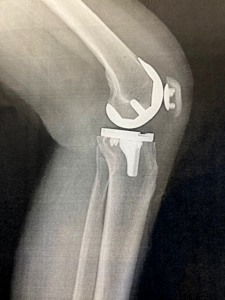
Dr. Altbuch used a robotics platform for Slattery’s knee replacement procedure. The system uses a CT scan of a patient’s joint to develop a personalized surgical plan. During the procedure, the surgeon guides a robotic arm to remove arthritic bone and cartilage from the knee and replaces it with prosthetic components called implants.

Patients may experience less swelling and faster recovery with a robotics-assisted procedure but still encounter post-operative knee pain.

“The hardest thing for patients is you have to move it when it hurts the most,” Dr. Altbuch said. “It does require a great deal of commitment from the patients to push through that first couple of weeks, which are the toughest.”

knee X-ray after robotics-assisted procedureDays after surgery, Slattery started physical therapy.

“You can’t let your knee stiffen, so you’ve got to work it. Therapy is tough, and I went twice a week,” she said. “I saw my X-ray, and my X-ray looked perfect. I just knew it was all up to me now to put in the work to get it going again.”

After three months of hard work, Slattery completed her physical therapy and resumed regular activities including walking, standing and climbing stairs.

Six months after her total knee replacement, Slattery bikes, golfs and walks her dogs with her husband. She enjoys life again with her new knee.

“I’m pain free,” she said. “I have no pain.”

Schedule an Evaluation during Arthritis Awareness Month

May is Arthritis Awareness Month. Arthritis is the leading cause of long-term disability in the U.S., impacting more than 53 million adults. By 2050, cases of osteoarthritis are projected to increase more than 74 percent for knees, 48 percent for hands and 78 percent for hips.

If you are experiencing chronic pain due to arthritis, contact your orthopedist, who will evaluate your symptoms. There is no cure for arthritis, but your doctor may suggest at-home pain management options like hot or cold therapies and massage, physical therapy or even surgery.

“I would definitely recommend a total joint, if they’re having the symptoms I had,” Slattery said. “Why wait around when you’ve got a solution to fix it?”

Tristan Altbuch, MD

If you are advised to have surgery, consider our ASCs for your orthopedic treatment. Factors determining whether patients are suitable for outpatient surgery include their age, existing medical conditions and the support they receive at home.

ASCs offer patients a more comfortable environment at a lower expense, convenient parking, shorter wait times and a decreased ratio of patients to nurses. Patients are sent home on the same day as the procedure to recuperate.

“Rapid recovery protocols help patients to get through these operations better. The quicker you can get people moving, the better for that patient’s recovery,” Dr. Altbuch said. “Ambulatory surgery centers are designed for rapid recovery.”

Before deciding on any treatment plan for your chronic pain, request an appointment with an orthopedist for an evaluation.


This article is designed for educational purposes only. The information provided should not be used for diagnosing or treating a health concern or disease. It is not a substitute for professional care. If you have or suspect you may have a health concern, you should consult your healthcare provider.

Filed Under: News Tagged With: ortho

Don’t Let Arthritis Prevent You from Playing Pickleball, Other Sports

April 30, 2024 by Emily Grant

Even if you have arthritis, pickleball can be a lifelong sport when taking proper precautions, like stretching, purchasing proper equipment and visiting your orthopedist regularly.

May is Arthritis Awareness Month

May is Arthritis Awareness Month. Osteoarthritis is the most common form of arthritis and affects 32.5 million Americans. Often referred to as “wear and tear” arthritis, osteoarthritis develops in the hips, knees and hands most frequently. It is estimated that 78 million Americans will have osteoarthritis by 2040.

Pickleball Is America’s Fastest-Growing Sport

With more than 8.9 million players in the United States last year, pickleball is creating a nationwide sensation as the sport of choice for seniors. Community centers offer pickleball leagues, and affinity groups even plan cruises and international travel around pickleball tournaments.

Combining elements of tennis and ping-pong, pickleball uses large paddles and a perforated ball that resembles a wiffle ball. For older tennis players with knee, hip, shoulder or joint issues, this option is a wise choice, as it reduces physical stress on the body compared to traditional tennis.

Pickleball is an activity for all ages, but racket sports require adequate stretching and proper equipment, as well as doctor’s recommendations, to avoid joint injuries.

Pickleball Players Are Prone to Injuries, Sprains and Joint Strain

Due to the frequent changes in direction and pace during pickleball, injuries can occur if you lack fast reactions and decent agility. Many new pickleball players were mostly sedentary before stepping onto the court, so there is a high injury rate for the sport.

Some of the most common injuries are rotator cuff injuries or strains and sprains in the ankle or leg. In some cases, pickleball can cause fractures and concussions. Based on research from a 2019 Journal of Emergency Medicine study, experts estimated there would be more than 66,750 emergency department visits and 366,000 outpatient visits from pickleball in 2023.

Pickleball participants often omit warm-ups and continue to play through an injury. Players can also aggravate existing osteoarthritis by twisting or trauma injury, creating a flare-up (Medical Xpress).

Prepare Your Muscles and Joints before Playing Sports

Warming up and doing prehab exercises are instrumental in staying injury free when playing any sport. With a 10-minute stretch and warm-up, you can protect your joints and avoid irritating osteoarthritis or other arthritic conditions. Before playing racket sports, try the following exercises:

  1. Begin with a slow jog in place or jumping jacks.
  2. Do arm circles and shoulder rotations. Make circles larger before reversing direction.
  3. Extend the arms and rotate shoulders backwards and forwards.
  4. Do leg swings by standing next to a wall for support and swing one leg back and forth. Repeat with the opposite leg.

The important thing to remember is to begin slowly and proceed at your own pace.

“Through physical therapy, my range of motion has improved, and I’ve gradually been able to increase how often I can play,” said Carole Harland, who teaches pickleball introductory classes at Poway Adult School. “Doing dynamic warm-ups and stretching is really important because your body has to be prepared and ready for the quick movements.”

Treat Joint Injuries Immediately to Prevent Further Damage

The interconnected nature of the body means that every part impacts other regions. For example, tight gluteal muscles and hamstrings may put strain on the calves, which can make someone more prone to injure an Achilles tendon.

If you do get an injury when playing pickleball, racket sports or other physical activity, remember to use the RICE method:

Rest: Avoid using or placing weight on the injured part of the body.

Ice: Apply ice or a cold compress to the injured area for 10 to 20 minutes.

Compression: Wrap the injured area with an ACE bandage or athletic tape.

Elevation: Elevate the injured area above the heart to prevent swelling.

See an Orthopedist during Arthritis Awareness Month

Repetitive motions like wrist flicks, lunging and underhand serves can stress your joints and develop overuse injuries. If you are a new pickleball player or are interested in getting involved in racket sports, make an appointment with your orthopedist to discuss your joint health. It is essential to assess your general health, medical history, medications, activity level and past surgeries so you can stay safe in exercising.

Your doctor may recommend certain gear or equipment that will not exacerbate osteoarthritis. If you are struggling with chronic joint pain, you may want to consider a total knee or total hip replacement to relieve pain when playing sports. Waiting too long can complicate your condition, so make an appointment today so you can maintain your active lifestyle and daily activities. You don’t have to “dill” with chronic pain when playing pickleball!

Filed Under: News Tagged With: ortho

Daily Walks Can Improve Joint Health

March 31, 2024 by Emily Grant

Moving and staying active are important components for lifelong health.

“It is exercise alone that supports the spirits and keeps the mind in vigor,” said Roman statesman Marcus Cicero around 65 BC.

You do not have to have the skill of an ancient Olympian to be fit, and being in shape doesn’t need to be expensive. Walking is an ideal exercise for all ages because it improves your joint health and boosts your cardiovascular fitness.

Why Walking Is Such a Good Exercise

Anyone can begin a daily fitness routine of walking because all you need is a set of supportive athletic shoes. Brisk walking is probably the least expensive cardio activity because it doesn’t require equipment or a gym membership, and you don’t need any special training. The health benefits of walking include the following:

  • Increased heart and lung fitness
  • Better management of chronic conditions like hypertension, diabetes and high cholesterol
  • Improved balance and flexibility
  • Weight loss
  • Decreased muscle pain and joint stiffness

“Walking’s a great way to work out because we can integrate it into our daily lives,” said Amanda Paluch, an assistant professor at the University of Massachusetts, Amherst. “And if you can just fit it around your house or within your neighborhood, it’s one of the most convenient options.”

Studies show walking also can reduce sweet cravings, relieve joint pain, improve the immune response, overcome obesity genetics and reduce breast cancer risk (Harvard Health).

Activity Trackers Can Motivate You in Your Walking Habits

Everyone needs some motivation when beginning a new habit. If you are just getting started with a walking routine, you may want to try an activity tracker to monitor your steps, heart rate, blood pressure and calories burned.

It is not necessary to purchase an expensive device. Even devices in the $20 range can offer the basic metrics. The reason why activity trackers are so effective is data access. Seeing progress toward your goal is a powerful motivator to meet your physical activity target. Some people like to set a goal of 10,000 steps per day. Your doctor will likely encourage you to follow the Centers for Disease Control and Prevention’s (CDC’s) recommendation of 150 minutes of moderately intense activity and strength training two times a week.

Get Moving during National Move More Month

April is a perfect time to begin a new walking goal because it is National Move More Month. If you have osteoarthritis or rheumatoid arthritis, walking may ease your joint pain. Walking makes your muscles stronger and transfers pressure from the joints. It also compresses and releases knee cartilage, which circulates synovial fluid that brings oxygen to the joints. When the joints aren’t nourished, they begin to deteriorate.

One study published in the American Journal of Preventive Medicine analyzed 1,564 adults older than 49 with lower-body arthritic pain. Patients who walked for 60 minutes each week were more likely to be disability-free four years later.

Here are four tips to get you started during National Move More Month:

  1. Invest in quality footwear. — You can’t meet your exercise goals if your feet hurt. Some athletic shoe stores will analyze your foot and gait to create customized recommendations for the best footwear for you.
  2. Find an exercise pal. — Walking with a friend or neighbor will make you feel safe and secure. A partner will also keep you accountable for meeting goals.
  3. Vary your route. — If you walk the same route every day, you will get bored. Take some time to map out new routes so you can enjoy new scenery.
  4. Track your progress. — Besides using a fitness tracker, keep a log of how far, long and often you walk. You will be encouraged to keep going in your fitness journey.

Talk to Your Orthopedist About a Walking Plan

Your health needs are unique to your age, body type, medical history and fitness level. If you are experiencing joint pain, make an appointment with your orthopedist to come up with an exercise plan. Your doctor may suggest specific strengthening exercises, physical therapy or even a procedure if pain persists.

In some cases, your doctor may suggest total knee or total hip replacement surgery to relieve pain and restore your mobility. Call today to make an appointment during National Move More Month and get moving toward better joint health.

Filed Under: News Tagged With: ortho

Fitness Trackers May Improve Joint Health

February 29, 2024 by Emily Grant

When the temperature drops and the weather is gloomy, it’s hard to find the motivation to exercise. Although it sounds appealing to stay inside, you need to exercise for your physical and mental health. Working out releases endorphins, increases immunity and combats seasonal affective disorder (SAD), a type of depression common in winter.

Most people need a little help and motivation to get moving. A good way to monitor your active lifestyle is by using activity trackers and fitness apps.

What Is a Fitness Tracker?

According to a poll, half of Americans use at least one kind of technology to track their health and fitness goals. Many people wear heart rate monitors and smart watches in the gym. Experts report wearable technology is the Top Fitness Trend for 2024 (ACSM).

A fitness monitoring device is a wearable gadget or mobile app that tracks physical movements. These movements include heart rate, calories expended and steps taken.

Physical activity is one of the most important components of health, but daily tasks often push exercise to the bottom of the list. Fitness trackers help because they give reminders and praise, two things to which humans respond positively.

Fitness trackers can remind you to “get moving” if you’ve been inactive for a period of time, or congratulate you, “You met your goal of 10,000 steps!” Accountability is essential when trying to cultivate any lifelong habit, and fitness trackers provide accurate, unbiased records about movement and activity in the day.

“Fitness trackers are a great tool for heart health,” says Johns Hopkins cardiologist Seth Martin, MD, MHS. “Being more active and changing your habits is important, but it can be difficult. Tracking likely helps a lot of people when combined with a clear goal to shoot for.”

What Are Some Benefits of Wearable Fitness Technology?

Many people say their fitness tracker makes all the difference in their day. Some favorite features of wearable fitness technology include the following:

  • Staying motivated
  • Activity awareness
  • Heart health monitoring
  • Sleep analysis
  • Goal setting and the feeling of achievement

What Features Should You Seek in an Activity Tracker?

What you need in a fitness tracker depends upon your goals. If you are just tracking your steps and minutes of activity, you might need nothing more than a Fitbit. If you want to delve deeper into fitness and aerobic exercise, you may want a smartwatch or more sophisticated fitness tracker.

Here are some features of fitness trackers that may interest you.

Resting heart rate

Most people’s resting heart rate is between 60 and 100 beats per minute. Exercise helps to lower your resting heart rate, which improves overall cardiac function and helps to reduce mortality rate. Therefore, resting heart rate is an important metric to monitor.

Heart rate during exercise

Heart rate zones, or HR zones, help you know how hard you’re training. There are five heart rate zones based on the intensity of your training with regard to your maximum heart rate (MHR). For moderate-intensity physical activity, your target heart rate (THR) should be 50 to 70 percent of your MHR.

If you’re not sure what your maximum heart rate is, it is based on your age. Your maximum heart rate can be calculated as 220 beats per minute (bpm) minus your age. This is just an estimate, and your doctor should help you determine your MHR.

VO2 Max

Your VO2 max is the volume of oxygen (O2) you can breathe maximally during a 60-second interval. VO2 max is a metric of fitness that correlates with your mortality risk. The higher your VO2 max, the healthier your heart.

Research shows that the most popular activity trackers are quite reliable when recording activity minutes and daily steps. Activity trackers can help adults meet the physical activity guidelines. Experts recommend 150 minutes of moderately intense activity per week and strength training two times a week.

Recent Research on Fitness Trackers

A study with 1,000 American adults found that wearable fitness devices greatly impact our health and overall happiness.

  • 80 percent of the study participants said they felt better physically and mentally after using a fitness tracker.
  • 50 percent said they increased their physical activity when they began wearing a health tracker.
  • 25 percent said they use fitness trackers to increase accountability and motivation for meeting activity goals.

How Exercise Affects Arthritis and Joint Pain

Strong muscles can support and protect arthritic joints. Research shows exercise can improve symptoms of osteoarthritis or rheumatoid arthritis. Exercise strengthens muscles around the joints and helps maintain bone strength.

“Exercise is good. But exercise intelligently,” says Bashir Zikria, MD, an assistant professor of sports medicine in Baltimore. “Low-impact exercises, like walking, cycling or using an elliptical machine are smart choices. If you run, play basketball or do other high-impact activities, avoid hard surfaces and don’t do it every day” (Arthritis.org).

An Orthopedist Can Help You Exercise Safely

Consistency is the key to making progress. We all need realistic goals, motivation to follow through and a way to track our progress. Fitness trackers and apps can provide all those things, but they can’t replace the expertise of a physician. Before you begin a new workout routine, talk to your doctor and create a customized plan.

If you are living with chronic pain, call your orthopedist to make an appointment. You may need physical therapy, medication or a procedure. Your doctor can also discuss options regarding procedures like total knee or total hip replacement, if necessary.

Filed Under: News Tagged With: ortho

Sitting Increases Risk for Joint Problems, Chronic Diseases

January 31, 2024 by Emily Grant

Limited physical activity and looking at screens all day is not good for your health, but Americans are becoming even more sedentary by sitting during work and leisure time.

According to the Bureau of Labor Statistics, about 27 percent of working Americans work at least part-time from home, but some studies show it may be closer to 50 percent. Sitting all day is causing a national health crisis, but regular movement breaks can enhance both your physical well-being and work efficiency.

Scheduled Movement Breaks Improve Health

How much walking is enough to counteract sitting for most of the day? Researchers at Columbia University Medical Center used the Columbia exercise lab to study 11 healthy middle-aged and older adults who sat in ergonomic chairs for eight hours and then went on regular walking breaks. The individuals were required to engage in a one-minute walk every 30 minutes, a one-minute walk every 60 minutes, a five-minute walk every 30 minutes, a five-minute walk every hour, or no walking at all.

The research team found five minutes of leisurely walking every half hour (as slow as 3 kilometers per hour), can help regulate blood sugar and blood pressure. However, the participants said it was difficult to take such frequent breaks, and only 50 percent were able to adhere to that schedule. Taking breaks every hour to two hours seemed more realistic.

More Movement Equals Better Health

According to the study, taking regular movement and stretching breaks had benefits such as the following:

  • Improved mood
  • More positive feelings and less negative emotions
  • Enhanced energy, with 25 percent reduction in fatigue
  • Increased engagement at work
  • Better job performance in quantity and quality

“What we know now is that for optimal health, you need to move regularly at work, in addition to a daily exercise routine,” stated study lead author Keith Diaz, assistant professor of behavioral medicine, in a news release. “While that may sound impractical, our findings show that even small amounts of walking spread through the workday can significantly lower your risk of heart disease and other chronic illnesses” (Medical Xpress).

Is a Standing Desk a Better Option?

Many people have opted for a standing desk, concluding that at least they are not sitting down. In truth, standing may not be beneficial.

“I’m not sure there’s really solid scientific evidence that standing is really any better than sitting,” Professor Diaz explained in Medical Express. “I worry that people have this false sense that they are healthy because they are using this desk, and maybe they’re not actually that much better.”

Professor Diaz said the most important thing is to incorporate movement into your day.

On a rainy or snowy day when you lack the motivation to leave the sofa, you can incorporate healthy routines into your daily routine.

  1. Begin your day with stretching. Doing some simple stretches or a few minutes of yoga can keep your joints limber and lubricated.
  2. Take walking breaks for five minutes every 30 minutes.
  3. Consider sitting on an exercise ball while you are working on your laptop or watching television.
  4. If you become lethargic during the workday, drink water or walk around and stretch your legs.
  5. Eat a nutritious, balanced diet with lots of fruits and vegetables, whole grains and lean proteins. Avoid simple carbohydrates and sugars.

Talk to Your Orthopedist About Reducing Joint Pain

If we continue spending much of our time seated, the World Health Organization predicts that conditions such as obesity, diabetes, heart ailments or other metabolic disorders will affect nearly 500 million individuals.

Prioritize your health by adding movement into your daily life. If you want to begin an exercise program, talk to your doctor first. Your orthopedist can help you create a diet and physical activity plan that is right for you. If you have any form of arthritis or have had total knee or total hip replacement surgery, ask your doctor to give you types of exercises that are gentle on your joints.

You don’t need to feel pain when doing your daily activities. Although nonsteroidal anti-inflammatory drugs can provide temporary relief, it may be necessary to undergo physical therapy or a procedure to address your specific condition. Call today to make an appointment.

Filed Under: News Tagged With: ortho

Joint-Friendly Exercises Safe for Your Home Gym

January 1, 2024 by Emily Grant

Going to the gym is not the only way to stay physically fit. For many people, working out at home provides more flexibility and efficiency. It all depends on how you use your time and equipment to maximize your effort.

If you opt for a workout program endorsed by a doctor and suitable for your joints, you can achieve an effective exercise routine within the comfort of your own home. Make a resolution this year to get moving for your health.

Cardiovascular Exercise is Essential for Your Health

Approximately 35 percent of workers who have jobs that can be done remotely are opting to work from their own residences, according to Pew Research Center. While this is convenient and cost-effective for employers and workers, millions of Americans spend much of their day in a sitting position. Being sedentary can increase the risk for many chronic conditions like obesity, diabetes, and cardiovascular disease and exacerbate joint conditions like arthritis.

As you age, you must be proactive about protecting joints, bones and muscles because they support your body and help you move.

Regular cardio exercise can benefit you in the following ways:

  • Improve your overall well-being
  • Enhance your learning, thinking and judgment skills
  • Help you manage your weight
  • Reduce symptoms of depression and anxiety
  • Lower your risk for metabolic syndrome

Daily exercise can also help you maintain balance and prevent falls that lead to hip fractures, which can impact your mobility and health.

Popular Types of Home Cardio Exercise

During the winter months, it is important to get the proper amount of physical exercise, especially if you are working from home. The Centers for Disease Control and Prevention (CDC) recommends at least 150 minutes of moderate-intensity or 75 minutes of vigorous-intensity cardiovascular exercise per week, even for older people.

The stationary bike, treadmill and rowing machine are three of the most common pieces of equipment people use in their home. Before deciding about which to purchase, it is wise to talk to an orthopedist about what type of exercise equipment will be best long-term for your joint safety and your health.

Stationary bike

If you are looking for a low-impact cardio exercise that will not strain your knee joints, the stationary bike is a smart choice. Because it is not weight-bearing, it will not benefit your bones as much as walking or running. However, if you have joint pain or have had a total joint replacement, the stationary bike may be the best piece of equipment for you to use because it creates less wear and tear on knees and hips. Setting up the bike correctly is essential to prevent injury during exercise, so educate yourself on proper setup and good form when you ride.

Treadmill

Almost everyone can exercise on a treadmill, even if you have arthritis. The key is exercising safely. The treadmill is a weight-bearing exercise, which helps maintain and strengthen your bones. If you have had a knee or hip injury, running on a treadmill is not advisable. However, walking would provide significant benefits. Your orthopedist can make recommendations about appropriate speed and distance when you use the treadmill. Your goal is to improve cardiovascular fitness without stressing your joints.

Rowing machine

Rowing machines offer one of the best cardio workouts in a short amount of time because you are using every major muscle group in the upper body. The rowing machine would not be a good option for someone who has shoulder pain or has reduced range of motion in the shoulder. Instead, it would be more beneficial to use a treadmill or stationary bicycle that targets the lower extremities. The rowing machine is not weight-bearing, so it would not help prevent osteoporosis or osteopenia, but it expends more energy than the stationary bike and treadmill.

Which Exercise is Best for Your Joint Health?

There is no perfect workout that works for everyone. Along with cardio exercise, it is also important to lift weights and do muscle-strengthening activities. Muscle mass and strength reduce with age, so older adults need to balance cardio exercise with weightlifting. You can purchase free weights and add basic weightlifting routines to supplement your cardiovascular workouts. Keeping bones, joints and muscles healthy will help you continue your daily activities and maintain your independence.

Other ways to stay healthy when working from home include the following:

  • Use a standing desk.
  • Sit on an exercise ball.
  • Walk during your lunch hour.
  • Elevate your feet to reduce leg pain and swelling.
  • Take regular breaks to stretch and move.
  • Enroll in physical therapy if you experience pain.

You should always consult a physician before beginning a new exercise routine. An orthopedist can help you choose exercises that are best for your age group and fitness level, especially if you have had a knee or hip replacement.

Filed Under: News Tagged With: ortho

Protect Your Joints This Winter

November 30, 2023 by Emily Grant

A winter storm sounds cozy if you can stay indoors, but snowy conditions pose hazards on icy roads and around your home. Studies show increased falls and joint injury after heavy snowfall, so talk to your orthopedist before shoveling snow or participating in strenuous winter activities.

Shoveling Can Cause Body Strain and Dangerous Falls

In 2018, the U.S. Consumer Product Safety Commission found medical facilities treated 137,000 people for shoveling or snowblower injuries. Many people see shoveling a driveway as good exercise, but there are many reasons why it could be harmful:

  • Cold air makes it harder to breathe and work, which puts additional strain on the body.
  • Cold air makes breathing and working harder, putting additional strain on the body. Shoveling puts a heavy demand on shoulder, hip and knee joints and can cause pain during and after physical activity.
  • Icy and slippery conditions can also make you more prone to a fall. According to the CDC, three million older people annually visit the ER for a fall. Hip fractures are particularly dangerous, and 95 percent of hip fractures are caused by falling.

Safety Tips for Shoveling Snow or Doing Winter Activities

Sometimes, you do not have a choice whether to shovel your driveway or sidewalk. However, there are many ways to be safe while being outside in the cold winter months:

  • Take time to stretch and warm up your muscles.
  • If you already feel stiffness or joint pain, do not engage in strenuous activity.
  • Let a family member or friend know where you will be going and how long you will be outside.
  • Ask a neighbor to help you with your outdoor task.
  • Wear several layers of clothing and remove them if you get too warm. Sweating can make you get cold faster.
  • Do not leave areas of skin exposed to the cold.
  • Avoid walking on ice.
  • Consider using rock salt, a chemical de-icer or sand instead of shoveling sidewalks, steps and driveways.

It is essential to know the symptoms of two other dangerous conditions:

Hypothermia is a severe condition when someone is exposed to extreme cold. Warning signs of hypothermia include shivering, fatigue, memory loss, slurred speech, confusion and fumbling hands.

Frostbite is an injury caused by freezing. The ears, nose, cheeks, fingers, chin and toes are more prone to frostbite, and damage can be permanent. Warning signs of frostbite are white or yellowish skin that feels numb, firm or waxy (Centers for Disease Control).

Call Your Orthopedist

If you are considering doing strenuous outdoor activities, contact your orthopedist. Do not ignore pain in your shoulder, hip, knee or ankle because it will probably worsen. An orthopedist can diagnose any joint problem and suggest treatment options. Sometimes, a minor surgical procedure is necessary to relieve pain or restore joint mobility. Call today to make an appointment.

Filed Under: News Tagged With: ortho

  • « Previous Page
  • 1
  • 2
  • 3
  • 4
  • …
  • 15
  • Next Page »