AMSURG and Palomar Health Form Strategic Surgery Center Partnership

June 4, 2024 by Emily Grant

The organizations established a joint venture to maximize access and quality care in San Diego County through Poway Surgery Center

NASHVILLE, Tennessee, June 4, 2024 — AMSURG, an independent leader in ambulatory surgery center (ASC) services, and Palomar Health, the most comprehensive healthcare provider in North San Diego County, have established a new joint venture with the health system’s Poway Surgery Center. The strategic partnership will enable the organizations and its affiliated physicians to increase access and quality outpatient care in Poway and the greater San Diego community.

“Palomar Health is known for providing quality care and services for its communities, which is aligned with AMSURG’s model of clinical and operational excellence,” said John Lamberth, Senior Vice President of Development at AMSURG. “Leveraging our organizations’ strengths and resources, this partnership will accelerate advancements in quality outpatient care and access for patients and communities in Poway and North San Diego County.”

Poway Surgery Center is a freestanding outpatient facility accredited by the Accreditation Association for Ambulatory Health Care (AAAHC). It has been operating as a multi-use facility, widening the range of care for Palomar Health patients. AMSURG has been involved in the surgery center prior to this new venture. The state-of-the-art facility boasts five operating rooms, with physicians providing outpatient surgical care across multiple specialties, including gastroenterology; orthopedics; ear, nose and throat; and more.

“AMSURG’s vast ASC network, demonstrated commitment to clinical excellence and high standards for patient safety and experience benefit both our providers and the patients we serve,” said Ryan Olsen, Chief Executive Officer of Palomar Health Medical Group and Chief Ambulatory & Strategy Officer of Palomar Health. “We come together to bring a modern and innovative surgery center that helps integrate the newest technologies and practices in a beautiful place of healing. With aligned goals and values that prioritize patients, this partnership will ensure that our communities continue to access and benefit from quality outpatient care.”

The center is currently open and accepting patients. If you or someone you know could benefit from Poway Surgery Center’s care and services, visit www.powaysc.com for more information or to request an appointment.

About AMSURG

AMSURG is an independent leader in ambulatory surgery center services, operating a network of more than 250 surgery centers nationwide. In partnership with physicians and health systems, the organization delivers high-quality patient care across a diverse spectrum of medical specialties, including gastroenterology, ophthalmology and orthopedics. With a focus on strategic growth and innovation, AMSURG is committed to transforming the future of ambulatory surgery center care and services. To learn more about AMSURG, visit www.amsurg.com.

About Palomar Health

Established in 1948, the award-winning team at Palomar Health provides the most comprehensive healthcare in North San Diego County through its two medical centers and more than 900 affiliated medical providers, serving more than half a million people. Palomar Health is nationally recognized as operating one of America’s 250 Best Hospitals; a Best 100 Hospital for joint replacement and orthopedic surgery; a Best Hospital for stroke care, heart care and bariatric surgery; a Diabetes and Stroke Center of Excellence; and a Blue Distinction Center for spine surgery, cardiac care and maternity.

Through its network of providers, Palomar Health offers medical services in virtually all fields of medicine, including primary care, cardiovascular care, emergency services, trauma, cancer, orthopedics, women’s health, behavioral health, rehabilitation, robotic surgery and bariatric surgery at offices strategically located throughout the North San Diego County region. For more information, please visit PalomarHealth.org.

###

AMSURG Contact:

Rick Curtsinger

Sr. Manager, Public Relations

AMSURG

Rick.Curtsinger@AMSURG.com


Palomar Health Contact:

Bianca Kasawdish

Vice President, Public Relations

InnoVision Marketing Group

Bianca@TeamInnoVision.com

Filed Under: News Tagged With: 2192

Cataract Surgery Can Clear Up Your Cloudy Vision

June 2, 2024 by Emily Grant

Cataracts are a leading cause of blindness and vision impairment, but surgery can restore cataract-related vision loss.

Learn the Facts about Cataracts During Cataract Awareness Month

Are spring flowers no longer as vibrant as you remember? Do you experience blurred or double vision? Is driving at night becoming increasingly difficult? If you answered “yes” to any of these questions, you may have cataracts.

June is Cataract Awareness Month, a time to learn about how cataracts form and what you can do to preserve your vision. A cataract forms in the lens of the eye. Over time, the lens clouds and prevents light from passing through. This clouded area is a cataract, and it will gradually impair vision as it grows.

Over time, cataracts can make everyday activities like reading, driving and house cleaning difficult and will cause vision loss if untreated.

Does Everyone Get Cataracts?

You can get cataracts in one eye or both eyes, but it does not spread from one eye to the other. By age 80, most adults have cataracts or have had cataract surgery.

Most cataracts form due to the natural aging process, but some cataracts can form because of the following:

  • Eye injury or surgery
  • Use of certain medications like steroids
  • Other diseases like diabetes

Cataract Surgery Is Safe and Effective

Your doctor may suggest cataract surgery if your condition is preventing you from doing your everyday activities. Clear vision is important for safety, especially for older adults.

Most people do not have to rush to have cataract surgery. Unlike other eye diseases like glaucoma, diabetic retinopathy or macular degeneration, cataracts do not cause permanent eye damage. However, there is no reason to wait for cataracts to stop your normal daily activities before removing them.

Cataract surgery is one of the most common and safest surgical procedures in the United States and around the world. Eye surgeons perform about four million cataract surgeries every year (nearly 28 million worldwide).

How Does Cataract Surgery Work?

When you are unable to do your daily activities while wearing your glasses, it is time to consider cataract surgery. An ophthalmologist is a physician with expertise in treating eye disorders and performing surgical procedures related to the eyes.

On the day of your procedure, you will receive drops to dilate your pupils. You may also receive mild sedation to help you relax. After you arrive in the operating room, an anesthesiologist will give you intravenous or local anesthesia. You won’t feel pain because your surgeon uses topical anesthetic.

During cataract surgery, your eye surgeon removes your damaged lens and replaces it with an intraocular lens (IOL). An IOL is a small, artificial lens for the eye. It is constructed from silicone, acrylic or another type of plastic material. Unlike contacts, IOLs are implanted inside the eye and are permanent.

In most cases, cataract surgery only takes about 10 to 20 minutes to complete. You’ll wake up feeling drowsy, but the recovery team will monitor you until you can walk around.

Shortly after surgery, you should notice colors appear brighter, but you may still experience some blurred vision for the first few days. You shouldn’t feel pain, but some people say their eyes feel scratchy. Your eye doctor will prescribe drops to prevent inflammation, and you will return for several post-op visits to make sure you are healing properly.

How Do I Choose the Best Type of IOL for My Vision?

IOLs have an array of features and focusing powers. Your ophthalmologist will take measurements of the eye length and curvature of the cornea to calculate your IOL’s focusing power.

There are three major categories of IOLs:

  • Monofocal IOL — Medicare and other insurance usually cover monofocal IOLs for cataract surgery. Monofocal lenses are designed for sharp distance vision, so you still may need reading glasses. If you have astigmatism and choose a monofocal lens, you likely will need to wear glasses all the time.
  • Astigmatism-correcting IOL — Astigmatism causes blurred vision because the cornea has an irregular shape. In some cases, a surgeon can make limbal relaxing incisions to alter the shape of the cornea and correct low levels of astigmatism. Toric IOLs can help with higher levels of astigmatism. This type of lens is not covered by insurance so you will pay an extra fee.
  • Multifocal IOL — A multifocal lens can help you see near, intermediate and distance and sometimes correct astigmatism so you may be able to be glasses-free. About 80 to 90 percent of patients with multifocal lenses don’t need to wear glasses. This is the most expensive IOL because insurance will not cover it. However, the multifocal lens potentially will save thousands of dollars because most people won’t have to purchase new eyeglasses or contact lenses.

Get a Comprehensive Eye Exam During Cataract Awareness Month

How long has it been since your last comprehensive eye exam? A dilated eye exam is the only way to properly diagnose cataracts. All adults older than 40 should get a complete eye exam with dilation.

Your doctor will give you a visual acuity test, look for refractive errors and evaluate your most recent prescription for glasses or contact lenses. Not all vision problems are obvious. Many conditions that affect your vision have no symptoms in the early stages. Eye exams are the best way to detect and diagnose common eye diseases like glaucoma, diabetic retinopathy and age-related macular degeneration.

Make an appointment with your eye doctor during the month of June to evaluate your eye health and screen for cataracts. Don’t miss out on the glorious colors of the season. Get screened for cataracts and say “yes” to clear vision!

Filed Under: News Tagged With: eye

Stay Cool in the Summer Heat to Prevent Joint Injury

June 2, 2024 by Emily Grant

Are you looking for ways to stay active this summer but are worried about aggravating your arthritis? Research shows people with arthritis benefit from moderate exercise to relieve pain and improve mobility, but hydration and breaks are essential to prevent injury.

One in Five Americans Has Arthritis

About 53.2 million adults in the United States, or 21.2 percent of the population, have arthritis. The National Health Interview Survey between 2019 and 2021 found one in five Americans was diagnosed with arthritis, rheumatoid arthritis, lupus, fibromyalgia or gout (CDC).

The survey also found arthritis was …

  • More common in women compared to men.
  • Less common with a college degree or higher.
  • More common among veterans compared to non-veterans.
  • More common as people age.

A Sedentary Lifestyle Makes Arthritic Symptoms Worse

Your activity level has a significant impact on arthritis and joint pain. Arthritis is more prevalent among sedentary adults (30.9 percent) compared to adults who meet physical activity recommendations (18.8 percent).

Inactivity due to arthritis can contribute to other chronic conditions like heart disease, obesity, diabetes and functional challenges.

Mild to Moderate Exercise Can Increase Mobility and Reduce Pain

Summer is a perfect time to enjoy outdoor activities and sports. Low-impact exercises like walking, biking, swimming and pickleball can benefit your heart as well as your joints and soft tissue.

The Arthritis Foundation suggests 150 minutes of moderate-intensity aerobic exercise or 75 minutes of vigorous-intensity. Any type of physical activity that increases your heart rate for 25 minutes is recommended three times per week. Staying active is essential for joint health because it can circulate synovial fluid to keep joints lubricated.

How to Exercise Safely in Summer Temperatures

In the peak of summer heat, it is a good idea to exercise indoors at a gym or fitness facility equipped with air conditioning and supervision from qualified personnel. Some people prefer to exercise outdoors, but you must take precautions.

“If you plan to exercise in the heat, know your fitness level, take frequent breaks, wear proper clothing, wear sunscreen, avoid [the] hottest times of the day and hydrate, hydrate, hydrate,” said Melanie McNeal, physical and occupational therapy manager in the Joseph Barnhart department of orthopedic surgery at Baylor College of Medicine in Houston.

Swimming can be especially deceiving because you may not realize you are losing water through sweating. It is important to take breaks to get out of the direct sun and hydrate with water or electrolyte drinks.

Six Safety Tips for Outdoor Exercise

  1. Consider working out in the morning or evening to avoid the hottest parts of the day when the sun is the most intense.
  2. Wear a sunscreen of at least 30 SPF and reapply it according to the instructions on the bottle.
  3. Opt for light-colored clothing made of wicking fabric to keep moisture away from your skin.
  4. Take plenty of fluids with you when you exercise outside. For an hour workout, you will need 40 to 60 ounces of water. It is always wise to bring more than you think you will need.
  5. Bring a large plastic bag with a cooling towel to apply to your neck and shoulders after your workout or during breaks.
  6. Wear a hat or sun visor, and always wear sunglasses that offer 100 percent UVA and UVB protection.

Pace Yourself During Your Workout to Avoid Injury

If you are new to exercise, it is important to pace yourself and begin slowly, especially if you have any form of arthritis or an artificial joint. Overexertion can cause dizziness and make you more prone to sprains, fractures and cruciate ligament tears.

Start your workout slowly and gradually increase the intensity. Warm up your muscles with a walk and stretch before you begin. Your stamina will improve and your chances of injury will decrease.

Aquatic exercises are excellent and appropriate for people of all ages, ability levels and body composition. This form of exercise is especially beneficial for joint health, as the buoyancy of the water helps alleviate the impact of your body weight on the joints and connective tissues. Exercises performed in shoulder-height water provide sufficient resistance while being easy on the knees and hips.

Do not get discouraged if you experience stiffness in various parts of your body when you begin a new type of physical activity. It may take six to eight weeks to adjust, but be patient. Maintaining an exercise regime will help your osteoarthritis and joint pain overall.

Start Your Fitness Journey by Taking a Walk

Fitness and joint health do not have to be expensive or complicated. Walking is a free activity that can increase cardio fitness, promote weight loss and reduce the risk of heart disease and hypertension. It also tones muscles and maintains bone mass, which reduces the risk of fractures during exercise or daily activities.

Everyone has different ability levels and challenges, so discuss your workout plans with your doctor or physical therapist. If you experience chronic pain or mobility challenges, call your orthopedist. You may need a supportive brace, pain medication or a procedure to relieve joint pain.

You also might be a candidate for total joint replacement surgery. Hip and knee joint replacements can help increase quality of life, maintain an active lifestyle and improve your mobility for years to come.

Filed Under: News Tagged With: ortho

Colon Cancer Is Preventable With Routine Screenings

June 2, 2024 by Emily Grant

Did you know that the second-leading cause of cancer death in the United States is one of the most preventable cancers? About 90 percent of colon cancer cases and deaths may be preventable, but millions of adults are not getting screened and are at risk for this life-threatening disease.

Study Suggests Millions of Americans Need Colon Cancer Screening

The lifetime risk of developing colon cancer is approximately five percent, or one in 20. New research published in JAMA Network Open found that there are approximately 57.1 to 59.6 million individuals aged 45 to 85 who are eligible for screening.

Despite the common belief that colon and rectal cancer only affect older individuals, it can impact people of all ages. Cases diagnosed before age 50 (called early-onset) have increased consistently in recent decades, but the reasons behind this trend remain unclear.

Approximately 20 percent of colon cancer diagnoses are linked to heredity, like Lynch syndrome and familial adenomatous polyposis (FAP). The other 80 percent may result from environmental factors such as alcohol and tobacco use and a low-fiber and high-fat diet.

Due to the rise in early-onset colon cancer cases, the American Cancer Society advises individuals with an average risk of developing the disease to start undergoing regular screenings at age 45.

Deficits in Colon Cancer Screenings

Many Americans are not up to date on colorectal cancer screening, leading to millions not receiving necessary medical care.

Derek W. Ebner, MD, of the division of gastroenterology and hepatology at the Mayo Clinic, conducted a study of people between 45 and 85 who were at average risk for colon cancer. In that sample, 59.3 percent to 61.8 percent were current on screening.

“We hope our estimates can support policy makers and health care stakeholders to advance initiatives surrounding colorectal cancer screening to prevent this disease or identify it earlier when more can be done to treat it,” Dr. Ebner said.

What Are the Screening Options for Colon Cancer?

Two main categories of colon cancer screening methods are tests that analyze stool samples and visual examinations. All tests have different risks and benefits.

  • Stool-based tests — These tests are non-invasive and check for signs of cancer in a stool sample. You must repeat these tests more often. Examples of stool-based tests include the following:
    • Fecal immunochemical test (FIT) — You must repeat this test every year.
    • FIT/Stool DNA test — You must repeat this test every three years.
    • Guaiac-based fecal occult blood test (gFOBT) — You must repeat this test every year.
  • Visual exams — These cancer screening tests look for abnormalities in the structure of the rectum and colon. Examples of visual exams include the following:
    • Colonoscopy — This is the gold standard for colon cancer screening because a doctor can remove pre-cancerous polyps during the procedure and reduce the risk of cancer. If you do not have polyps, you may not need to repeat the test for 10 years.
    • CT colonography — This screening must be repeated every five years.
    • Sigmoidoscopy — This must be repeated every five years.

Which Colorectal Cancer Screening Method Is Best?

Many tests can screen for colon cancer, but a colonoscopy can detect, diagnose and remove polyps in the same procedure, making it the gold standard of screening methods.

Often, the best colon cancer screening is the one that gets done. Because screening rates are lower than they should be, any colon cancer screening is better than no colon cancer screening.

Stool-based tests have the benefit of being non-invasive and convenient. Many average-risk patients prefer a stool test because it does not require preparation, diet changes or sedation. If you receive an abnormal result from a stool-based test, it is important to follow up with a colonoscopy (American Cancer Society). Follow-up is recommended within six months after an abnormal test result.

Lifestyle Factors That Affect Colon Cancer Risk

Since most colon cancers are not hereditary, you can make choices that affect your personal risk. Actionable steps you can take to prevent colon cancer include the following:

  1. Eat a diet high in fruits, vegetables, whole grains and fiber.
  2. Decrease your intake of red meat like beef, pork and lamb and processed meat such as hot dogs and deli meats.
  3. Get daily exercise. Obesity is linked to colon cancer risk, so a healthy BMI will reduce your risk.
  4. Manage your weight. A healthy BMI will make you less prone to obesity, which can make you more likely to develop colon cancer.
  5. Do not smoke or use tobacco.
  6. Avoid alcohol. Alcohol use increases your risk of colon and rectal cancer, so it is best to not drink.
  7. Get screened for colorectal cancer starting at age 45 if you are at average risk.

Is It Time for Your Colon Cancer Screening?

Many insurance plans cover screening colonoscopies for patients starting at age 45. Contact your insurance provider to confirm coverage. Colonoscopy prep has never been easier, thanks to the low-dose prep solution.

If you have risk factors or a family history of the disease, talk to your doctor about screening earlier. If you have digestive symptoms, see your healthcare provider for evaluation.

Ask your gastroenterologist for more information about colon cancer screening, inflammatory bowel disease or other digestive system conditions. Call today to make an appointment.

Filed Under: News Tagged With: gi

Mobility Improves Following Robotics-Assisted Knee Surgery

May 27, 2024 by Emily Grant

Gainesville, Florida, retiree Kim Slattery loves walking her Siberian huskies, Madigan and Mingo, around her neighborhood.

Her energetic dogs require individualized attention during their daily excursions because of their size.

“I can only walk one at a time because they think I’m a sled,” Slattery, 66, laughed.

Along with her dog-walking workouts, Slattery’s active lifestyle includes exercising and playing golf, while managing slight tendonitis in her knees. In the winter of 2023, intense pain in her left knee forced her to stop her activities.

“I always stayed pretty active,” she said. “It got to the point where I could hardly walk.”

X-rays in March 2023 showed Slattery had started developing osteoarthritis, and an MRI revealed a complex meniscus tear in her left knee.

“Instead of going right to a knee replacement, we went and cleaned up the tearing in the cartilage in her knee,” said Slattery’s orthopedic surgeon Tristan Altbuch, MD. “I think from her X-rays and from her functional level, and the amount of pain that she was having, a knee replacement at that time wasn’t warranted.”

Over the next six months, the arthritis worsened in Slattery’s knee. Osteoarthritis causes the deterioration of cartilage in joints, resulting in bones rubbing against each other, leading to pain and limited movement. This type of arthritis develops in the hips, knees and hands most frequently.

Kim Slattery playing golf

Constant pain made it difficult for Slattery to complete household chores and affected her daily routine. She relied on over-the-counter anti-inflammatory medications to sleep at night.

“I couldn’t golf. I was pretty limited. I couldn’t walk my dogs anymore. I was limping everywhere I went. It totally affected my social life,” Slattery said. “[Arthritis] really didn’t bother me until I tore my meniscus. I could barely walk. It hurt so bad.”

Patient Opts for Robotics-Assisted Procedure

After consulting with Dr. Altbuch, Slattery opted for a robotics-assisted total knee replacement on Nov. 16, 2023, at an ambulatory surgical center (ASC).

“Her knee joint spaces continued to narrow and compress against each other,” Dr. Altbuch said. “That led to her having more pain, significant enough to interfere with activities and daily living.”

Every year, approximately 790,000 knee replacement procedures are performed in the United States. The American Academy of Orthopaedic Surgeons estimates these procedures will increase to 3.5 million annually by 2030.

“Once I had that [cartilage] removed, it progressed pretty fast to bone-on-bone,” Slattery said. “I knew I was looking at a total knee eventually, but I didn’t think it would be that fast.”

Surgery consideration depends on the patient’s past treatments and level of pain. Treatments may include anti-inflammatory pain medications, icing the joint, injections or modifying activities like trying low-impact walking instead of high-impact jogging or running.

“Knee replacements really aren’t for people who have [lower pain levels of] two or three. The best results are in patients who have severe pain,” Dr. Altbuch said. “This is a big operation. It’s a big undertaking. It’s changing the knee joint permanently. We think for people with severe arthritis it’s making it better.

Dr. Altbuch used a robotics platform for Slattery’s knee replacement procedure. The system uses a CT scan of a patient’s joint to develop a personalized surgical plan. During the procedure, the surgeon guides a robotic arm to remove arthritic bone and cartilage from the knee and replaces it with prosthetic components called implants.

Patients may experience less swelling and faster recovery with a robotics-assisted procedure but still encounter post-operative knee pain.

“The hardest thing for patients is you have to move it when it hurts the most,” Dr. Altbuch said. “It does require a great deal of commitment from the patients to push through that first couple of weeks, which are the toughest.”

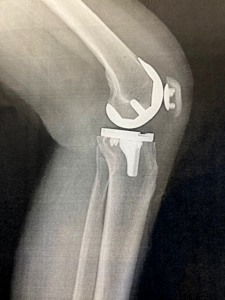
knee X-ray after robotics-assisted procedureDays after surgery, Slattery started physical therapy.

“You can’t let your knee stiffen, so you’ve got to work it. Therapy is tough, and I went twice a week,” she said. “I saw my X-ray, and my X-ray looked perfect. I just knew it was all up to me now to put in the work to get it going again.”

After three months of hard work, Slattery completed her physical therapy and resumed regular activities including walking, standing and climbing stairs.

Six months after her total knee replacement, Slattery bikes, golfs and walks her dogs with her husband. She enjoys life again with her new knee.

“I’m pain free,” she said. “I have no pain.”

Schedule an Evaluation during Arthritis Awareness Month

May is Arthritis Awareness Month. Arthritis is the leading cause of long-term disability in the U.S., impacting more than 53 million adults. By 2050, cases of osteoarthritis are projected to increase more than 74 percent for knees, 48 percent for hands and 78 percent for hips.

If you are experiencing chronic pain due to arthritis, contact your orthopedist, who will evaluate your symptoms. There is no cure for arthritis, but your doctor may suggest at-home pain management options like hot or cold therapies and massage, physical therapy or even surgery.

“I would definitely recommend a total joint, if they’re having the symptoms I had,” Slattery said. “Why wait around when you’ve got a solution to fix it?”

Tristan Altbuch, MD

If you are advised to have surgery, consider our ASCs for your orthopedic treatment. Factors determining whether patients are suitable for outpatient surgery include their age, existing medical conditions and the support they receive at home.

ASCs offer patients a more comfortable environment at a lower expense, convenient parking, shorter wait times and a decreased ratio of patients to nurses. Patients are sent home on the same day as the procedure to recuperate.

“Rapid recovery protocols help patients to get through these operations better. The quicker you can get people moving, the better for that patient’s recovery,” Dr. Altbuch said. “Ambulatory surgery centers are designed for rapid recovery.”

Before deciding on any treatment plan for your chronic pain, request an appointment with an orthopedist for an evaluation.


This article is designed for educational purposes only. The information provided should not be used for diagnosing or treating a health concern or disease. It is not a substitute for professional care. If you have or suspect you may have a health concern, you should consult your healthcare provider.

Filed Under: News Tagged With: ortho

5 Reasons Why You Should Choose Gastrointestinal Specialists, P.C. in Metro Detroit, Michigan

May 8, 2024 by Emily Grant

Are you experiencing abdominal discomfort, bloating, or irregular bowel movements? Are you 45 or older and need a colonoscopy to screen for colon cancer? Either way, you can visit us at Gastrointestinal Specialists, P.C. in Troy, Michigan, for a thorough evaluation, diagnosis, and treatment – plus, you can go here instead of a hospital for your procedures (which saves you time and money!).

At Gastrointestinal Specialists, P.C., we specialize in determining what’s causing your intestinal issues, for whatever your gastrointestinal issue is – from heartburn, Celiac Disease, Irritable Bowel Syndrome, Colon Cancer, Lactose Intolerance, and everything in between.

Here’s why scheduling an appointment with our specialized team is the right choice for your digestive well-being:

1. Comprehensive Care

Our team of board-certified gastroenterologists specializes in diagnosing and treating a wide range of digestive conditions. Whether you’re dealing with abdominal pain, bloating, diarrhea, constipation, or anything else (in addition to other non-digestive symptoms that may be related), we offer personalized care tailored to your unique needs so your colon can be in tip-top shape.

2. Expertise in Gastrointestinal Disorders

From acid reflux to swallowing difficulties and gastrointestinal bleeding, our specialists have the knowledge and experience to pinpoint the underlying causes of your symptoms. We use state-of-the-art diagnostic techniques to provide accurate assessments and develop effective treatment plans, so you start feeling better.

3. Colonoscopies

Colon cancer is PREVENTABLE – and regular colonoscopies are essential for early detection and prevention. Our clinic offers comprehensive colonoscopy services in a comfortable and convenient setting, not a hospital, and the costs are often a third of what it would be in a hospital for the same procedures.

4. Cost-Savings

Unless you have a health condition that requires access to a full-service hospital, your surgical procedures can be performed at our surgical center. As a result, you’ll generally save at least half the cost than those performed at a hospital – all while still receiving the same quality of care.

5. Comfortable Environment

Unlike hospitals, our practice focuses exclusively on gastrointestinal care. This specialization allows us to offer streamlined appointments, shorter wait times, convenient parking, a smaller and more comfortable atmosphere, and a more personalized experience for our patients. You’ll receive attentive care from our dedicated team of specialists every step of the way.

Schedule Your Way to Better Health Now!

Don’t let digestive issues hold you back from living your best life. Schedule an appointment with Gastrointestinal Specialists, P.C. in Troy, Michigan and take the first step toward better digestive health. Your well-being is our top priority, and we’re here to support you every step of the way.

Filed Under: News Tagged With: 2110

Eyes Need Protection for Pickleball, Other Racket Sports

April 30, 2024 by Emily Grant

Pickleball is a popular sport, especially among seniors and retired Americans. Even though pickleball seems as harmless as ping-pong, it can cause serious eye injuries, so it is essential to protect your vision.

Pickleball Is the Nation’s Fastest-Growing Sport

A combination of badminton, ping-pong and tennis, pickleball is an energetic sport that is easy to learn and suitable for all levels of athletic ability. Invented in 1965, pickleball has skyrocketed in popularity in the last five years, with participation up 159 percent from 2019 to 2022. Seniors especially enjoy the sport, with more than 80 percent of players being 60 and older.

“Eye injuries in sport are a mix of factors relating to the presence of a bat or ball, the size of the court and opportunity for impact with other players increasing the risk of eye injury,” said Annette Hoskin, PhD, a Research Fellow at the Save Sight Institute, University of Sydney and the Lions Eye Institute, University of Western Australia in Perth.

Dr. Hoskin said there has been a remarkable increase in pickleball injuries as more people discover the sport.

Racket Sports Can Cause Serious Eye Injuries

Smaller balls like racquetballs, squash balls and pickleballs are more likely to cause eye injury because they can fit in the eye socket without hitting the bone. Even though pickleballs are lightweight and move about one-third the speed of tennis balls, they can still travel up to 40 miles per hour and cause more damage than footballs or tennis balls.

“While pickleball is generally considered to be a safe sport due to its non-contact nature, the risk of eye injuries cannot be overlooked,” said Andrew G. Lee, MD, chair of the Blanton Eye Institute at Houston Methodist. “The high velocity of the ball and small court poses a significant risk for eye injuries.”

Older people are particularly vulnerable to ocular injury because they may lack quick reflexes, and those who have pre-existing eye conditions are at even higher risk. CBS News stated pickleball injuries have nearly doubled, from just under 9,000 in 2020 to over 17,000 in 2022, and three out of four injuries since 2018 involved individuals aged 55 to 75.

“A lot of people stand very close to the net when they’re playing pickleball,” said Raj Maturi, MD, ophthalmologist and member of the American Academy of Ophthalmology. “A ball directed to the eye can come faster than you have time to reflexively react to, causing significant vision impairment.”

Pickleball and other racket sports can cause several types of eye injuries, including the following:

  • Corneal abrasion
  • Vitreous hemorrhage
  • Retinal tears
  • Retinal detachment
  • Posterior vitreous detachment
  • Traumatic lens dislocation

Wear Proper Eye Protection When Playing Racket Sports

People who play racquetball and squash are more likely to wear eye protection, but pickleball players rarely wear protective glasses. About 90 percent of serious eye injuries could be prevented by wearing appropriate eyewear.

Studies show that wearing sports goggles, safety visors or face shields are the most effective method to protect the eyes and prevent injury. The most effective eyewear are polycarbonate safety goggles with front and side coverage.

Get Your Eyes Checked during Healthy Vision Month

May is Healthy Vision Month. Yearly visits to the eye doctor are as important as getting a wellness check with your primary care physician. Healthy vision keeps you safe and allows you to participate in the daily activities you enjoy, like reading, driving and caring for your home and pets.

Preventive vision care is essential because 2.9 million Americans have low vision, and 1.3 million are blind. Vision loss and eye disease cause an economic burden of $139 billion, but 80 percent of vision impairment is avoidable through preventive care and treatment.

Call Your Ophthalmologist Today to Schedule a Comprehensive Eye Exam

Has it been over a year since you had a complete eye exam? Healthy Vision Month is a perfect time to call your eye doctor and schedule appointments for your family. You should schedule annual eye screenings at age 40 or earlier if you have hypertension, diabetes or a family history of eye disease.

Approximately 37 million adults in America have age-related macular degeneration, cataracts, diabetic retinopathy or glaucoma, all of which can cause visual impairment or blindness. A comprehensive eye exam is the best way to find out if you have eye problems, need a new prescription or are in the early stages of a chronic eye condition or disease.

Filed Under: News Tagged With: eye

Does Eating Red Meat Increase Colon Cancer Risk? Researchers Study Genetic Link.

April 30, 2024 by Emily Grant

As the weather warms up and the days get longer, it’s time for grill masters and rookies alike to fire up the Green Egg, flat top grill and smoker to sizzle up barbecued meats.

Although everyone loves burgers, bratwurst and ribeye steaks, these meats can raise cholesterol levels and increase your risk of developing cancer. A new study supported by the National Institutes of Health suggests that genotype can affect colon cancer risk based on red or processed meat consumption.

New Study Underscores Health Risks of Red and Processed Meat

The study found that people who ate red or processed meat were more likely to develop colorectal cancer (CRC). The study was led by the USC Norris Comprehensive Cancer Center, part of the Keck School of Medicine of USC. The results were published in Cancer Epidemiology, Biomarkers & Prevention.

The researchers studied data on more than 29,000 people with colon cancer and more than 39,000 without colon cancer. During the study, they isolated two genes, HAS2 and SMAD7, that affected colon cancer risk based on red or processed meat consumption.

They also included data from 27 studies of colorectal cancer risk in participants of European ancestry. The team analyzed consumption of red meat like beef, pork and lamb as well as processed meat, including hot dogs, deli meat, bacon and sausage. Participants with the highest levels of red meat intake increased their risk for colorectal cancer by 30 percent, and those with the highest levels of processed meat intake increased their risk by 40 percent.

The study found that people who had a variant of the HAS2 gene present in 66 percent of the population faced a 38 percent higher risk of colorectal cancer if they consumed the highest amount of meat.

“These findings suggest that different genetic variants may confer a differing risk of colorectal cancer in individuals who consume red meat and highlight possible explanations for how the disease develops,” said a study co-author Joel Sanchez Mendez, a doctoral student in the Keck School of Medicine’s department of population and public health sciences.

In the future, the research team wants to continue experimental studies that could “provide stronger evidence for the role of dysregulated iron metabolism in the development of colorectal cancer” (Medical Xpress).

What Are Some Alternatives to Red or Processed Meat?

No one can resist the aroma of grilling food over an open flame. But foods like hamburgers, kielbasa, pork butt and lamb chops can put you at risk for colon cancer. In fact, all muscle meats that get charred can be harmful to your gut.

Heterocyclic amines (HCAs) and polycyclic aromatic hydrocarbons (PAHs) are chemicals formed when beef, pork, fish, or poultry cooks at high temperatures. Laboratory studies show HCAs and PAHs change the DNA in meat and can increase the risk of cancer.

You can still enjoy all the flavor of an outdoor barbecue by grilling colorful vegetables like peppers, squash, onions, eggplant and zucchini. You can even grill fruit like pineapple, apples, peaches, plums, nectarines, apricots, pears and mangos.

Are You Younger Than 50? Colon Cancer Incidence Is Increasing.

According to the American Cancer Society, 2024 is the first year that an estimated two million Americans will receive a cancer diagnosis. Because of higher screening rates, colon cancer incidence is declining among older Americans, but it is steadily increasing in younger adults.

Of all the cancer deaths in people younger than 50, colorectal cancer is the leading cause of death in men and the second-leading cause of death in women. Increasing obesity rates may account for some cases of young-onset colon cancer, but there are unknown reasons as well.

Routine Screenings Can Detect and Prevent Colon Cancer

Routine screening is the most effective way to detect and prevent colorectal cancer, even more so than diet or exercise. Colon cancer can affect all age groups, but the U.S. Preventive Services Task Force recommends that adults at average risk for colon cancer should begin screening at age 45 and continue to age 75. Individuals with a family history of colon cancer or polyps, inflammatory bowel disease or hereditary colon cancer should consider getting screened for CRC at an earlier age.

Several screening options are available, but the gold standard is colonoscopy. The goal of colonoscopy is to find and remove polyps, which are growths on the colon wall. Most polyps are non-cancerous, but if left untreated, some may develop into cancer. If the exam does not detect polyps and you are not at higher risk for colon cancer, the next screening may be in 10 years.

If you choose to take an alternate screening test and your result is positive, you will need a follow-up colonoscopy to determine the cause of the positive result.

Call Your Gastroenterologist Today

How long has it been since your last colon cancer screening? Call your gastroenterologist if you are not sure. If you are experiencing GI problems like abdominal pain, nausea, diarrhea or constipation, you should make an appointment to see a specialist. Ignoring issues may only make the problem worse, so call today and schedule an evaluation.

Filed Under: News Tagged With: gi

Don’t Let Arthritis Prevent You from Playing Pickleball, Other Sports

April 30, 2024 by Emily Grant

Even if you have arthritis, pickleball can be a lifelong sport when taking proper precautions, like stretching, purchasing proper equipment and visiting your orthopedist regularly.

May is Arthritis Awareness Month

May is Arthritis Awareness Month. Osteoarthritis is the most common form of arthritis and affects 32.5 million Americans. Often referred to as “wear and tear” arthritis, osteoarthritis develops in the hips, knees and hands most frequently. It is estimated that 78 million Americans will have osteoarthritis by 2040.

Pickleball Is America’s Fastest-Growing Sport

With more than 8.9 million players in the United States last year, pickleball is creating a nationwide sensation as the sport of choice for seniors. Community centers offer pickleball leagues, and affinity groups even plan cruises and international travel around pickleball tournaments.

Combining elements of tennis and ping-pong, pickleball uses large paddles and a perforated ball that resembles a wiffle ball. For older tennis players with knee, hip, shoulder or joint issues, this option is a wise choice, as it reduces physical stress on the body compared to traditional tennis.

Pickleball is an activity for all ages, but racket sports require adequate stretching and proper equipment, as well as doctor’s recommendations, to avoid joint injuries.

Pickleball Players Are Prone to Injuries, Sprains and Joint Strain

Due to the frequent changes in direction and pace during pickleball, injuries can occur if you lack fast reactions and decent agility. Many new pickleball players were mostly sedentary before stepping onto the court, so there is a high injury rate for the sport.

Some of the most common injuries are rotator cuff injuries or strains and sprains in the ankle or leg. In some cases, pickleball can cause fractures and concussions. Based on research from a 2019 Journal of Emergency Medicine study, experts estimated there would be more than 66,750 emergency department visits and 366,000 outpatient visits from pickleball in 2023.

Pickleball participants often omit warm-ups and continue to play through an injury. Players can also aggravate existing osteoarthritis by twisting or trauma injury, creating a flare-up (Medical Xpress).

Prepare Your Muscles and Joints before Playing Sports

Warming up and doing prehab exercises are instrumental in staying injury free when playing any sport. With a 10-minute stretch and warm-up, you can protect your joints and avoid irritating osteoarthritis or other arthritic conditions. Before playing racket sports, try the following exercises:

  1. Begin with a slow jog in place or jumping jacks.
  2. Do arm circles and shoulder rotations. Make circles larger before reversing direction.
  3. Extend the arms and rotate shoulders backwards and forwards.
  4. Do leg swings by standing next to a wall for support and swing one leg back and forth. Repeat with the opposite leg.

The important thing to remember is to begin slowly and proceed at your own pace.

“Through physical therapy, my range of motion has improved, and I’ve gradually been able to increase how often I can play,” said Carole Harland, who teaches pickleball introductory classes at Poway Adult School. “Doing dynamic warm-ups and stretching is really important because your body has to be prepared and ready for the quick movements.”

Treat Joint Injuries Immediately to Prevent Further Damage

The interconnected nature of the body means that every part impacts other regions. For example, tight gluteal muscles and hamstrings may put strain on the calves, which can make someone more prone to injure an Achilles tendon.

If you do get an injury when playing pickleball, racket sports or other physical activity, remember to use the RICE method:

Rest: Avoid using or placing weight on the injured part of the body.

Ice: Apply ice or a cold compress to the injured area for 10 to 20 minutes.

Compression: Wrap the injured area with an ACE bandage or athletic tape.

Elevation: Elevate the injured area above the heart to prevent swelling.

See an Orthopedist during Arthritis Awareness Month

Repetitive motions like wrist flicks, lunging and underhand serves can stress your joints and develop overuse injuries. If you are a new pickleball player or are interested in getting involved in racket sports, make an appointment with your orthopedist to discuss your joint health. It is essential to assess your general health, medical history, medications, activity level and past surgeries so you can stay safe in exercising.

Your doctor may recommend certain gear or equipment that will not exacerbate osteoarthritis. If you are struggling with chronic joint pain, you may want to consider a total knee or total hip replacement to relieve pain when playing sports. Waiting too long can complicate your condition, so make an appointment today so you can maintain your active lifestyle and daily activities. You don’t have to “dill” with chronic pain when playing pickleball!

Filed Under: News Tagged With: ortho

Digestive Disorder? Explore Lesser-Known Conditions and Learn How to Feel Better

April 2, 2024 by Emily Grant

You may think the uncomfortable feeling you get after eating, or the bloat that’s seems to happen randomly is just a part of life – but it could be a lesser-known digestive disorder that’s wreaking havoc on your gut.

While conditions like colon cancer and the importance of colonoscopies often take center stage in gastrointestinal health discussions, other disorders can be causing you distress…so it’s time to find out the causes and management strategies so you can start feeling better!

Irritable Bowel Syndrome (IBS)

Irritable Bowel Syndrome is a common gastrointestinal disorder characterized by abdominal pain, bloating, and changes in bowel habits without any evidence of underlying damage. It’s estimated to affect up to 15 percent of people, yet many remain undiagnosed or undertreated.

Symptoms can vary widely from person to person, making diagnosis challenging. However, lifestyle modifications, dietary changes, and stress management techniques can often help alleviate symptoms and improve quality of life for individuals with IBS.

Talk to your doctor about ALL your symptoms (no matter how seemingly minor or sporadic) so we can help you feel better.

Crohn’s Disease and Ulcerative Colitis

Crohn’s disease and ulcerative colitis are inflammatory bowel diseases (IBD) that cause chronic inflammation of the digestive tract. While they share some similarities, they also have distinct characteristics.

Crohn’s disease can affect any part of the gastrointestinal tract, from the mouth to the anus, and often involves deep layers of the intestinal wall.

Ulcerative colitis, on the other hand, primarily affects the colon and rectum, causing inflammation and ulcers in the lining of the colon.

Treatment typically involves medication to reduce inflammation, manage symptoms, and prevent complications, although surgery may be necessary in severe cases.

If you let us know all the symptoms you ever encounter, we can help properly diagnose and treat your digestive conditions.

Celiac Disease

Celiac disease is an autoimmune disorder triggered by the ingestion of gluten, a protein found in wheat, barley, and rye. When individuals with Celiac disease consume gluten, their immune system essentially attacks the small intestine, leading to inflammation and damage to the intestinal lining.

Celiac disease has a range of symptoms, including abdominal pain, diarrhea, fatigue, and weight loss – and many are symptoms beyond what many may think are related to a gut issue.

Treatment includes a gluten-free diet – but we have to make sure that’s what’s going on so we can be sure to treat everything properly, in case there are other conditions as well.

Managing Digestive Disorders:

As with many health conditions, maintaining a healthy lifestyle helps ease symptoms of digestive disorders.

Most importantly, a proper diagnosis from a gastrointestinal doctor is imperative to check all possibilities and provide a treatment plan that not only makes you feel better, but reduces the amount of damage done to your body.

Make an Appointment Today

At Gastrointestinal Specialists, P.C. in Troy, Mich., we can test you to determine if you have Celiac Disease, IBS, Crohn’s, or any other digestive disorder. Contact us today to schedule your appointment and take care of your gut health!

Filed Under: News Tagged With: 2110

  • « Previous Page
  • 1
  • …
  • 17
  • 18
  • 19
  • 20
  • 21
  • …
  • 87
  • Next Page »